
Yellowmouth barracuda
Scientific name: Sphyraena viridensis
Suborder: Sphyraenoidei
Genus: Sphyraena
Family: Sphyraenidae
Habitat: Coastal and offshore waters, rocky bottoms, seagrass meadows (Posidonia oceanica), and open water; typically from shallow waters down to ~100 m.
Maximum length in the Mediterranean: Commonly around 40-60 cm, with maximum recorded lengths up to 120 cm.
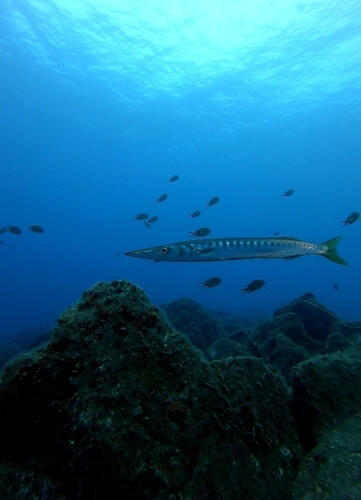
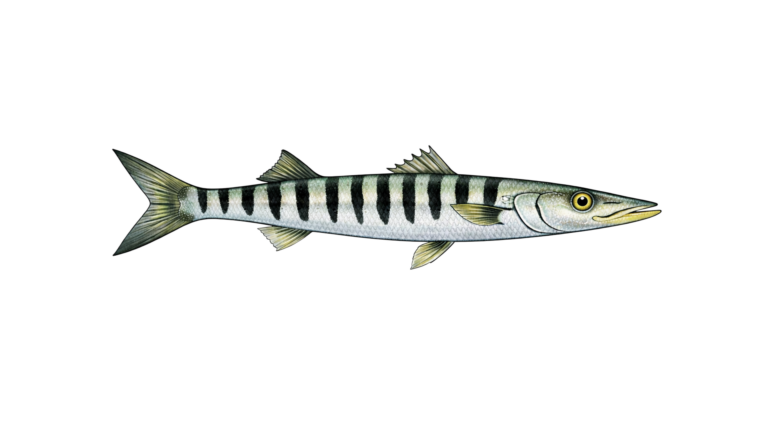
The yellowmouth barracuda has a long, slender, almost cylindrical body, well adapted for fast swimming. Its coloration is silver-grey, becoming darker along the dorsal side, with approximately twenty dark transverse bands that extend halfway down the flanks. The head is pointed and relatively small, with a centrally positioned eye. Its wide mouth, often tinged with yellow, contains two rows of long, canine-like teeth adapted for capturing prey. Unlike the European barracuda (Sphyraena sphyraena), the teeth of the yellowmouth barracuda are not visible when the mouth is closed. Despite its predatory appearance, it is not considered dangerous to humans.
This species often forms highly cohesive schools, sometimes composed of hundreds of individuals, which can be observed in coastal waters and around rocky reefs. These large, coordinated groups move together while hunting small fish and other prey.
An interesting ecological aspect of this species is that it is considered a thermophilic fish, meaning it prefers warmer waters. Originally an Atlantic species, the yellowmouth barracuda has successfully expanded its range into the Mediterranean Sea. Its increasing presence in the region is often associated with the warming of Mediterranean surface waters, which has facilitated the spread of several warm-water species in recent decades.
In coastal Mediterranean waters, the yellowmouth barracuda faces several pressures mainly linked to human activity. Although it is not always a primary target, it can be caught by small-scale and recreational fisheries, as well as accidentally captured as bycatch in nets and longlines. Habitat degradation in coastal zones—caused by coastal development, pollution, and seabed disturbance—can also affect the areas where juveniles and shoals gather. In addition, plastic pollution and other contaminants present in nearshore waters may accumulate through the food chain, potentially affecting the species’ health. Heavy marine traffic and intense recreational activities in coastal environments may further disturb large schools and alter their natural behaviour.
Despite these pressures, the species has shown a capacity to expand its range in the Mediterranean, partly due to warming sea temperatures, although environmental changes could still influence its distribution and prey availability in the future.
Threats
What can we do?
Threats
What can we do?
Threats
What can we do?
Experiences you may enjoy
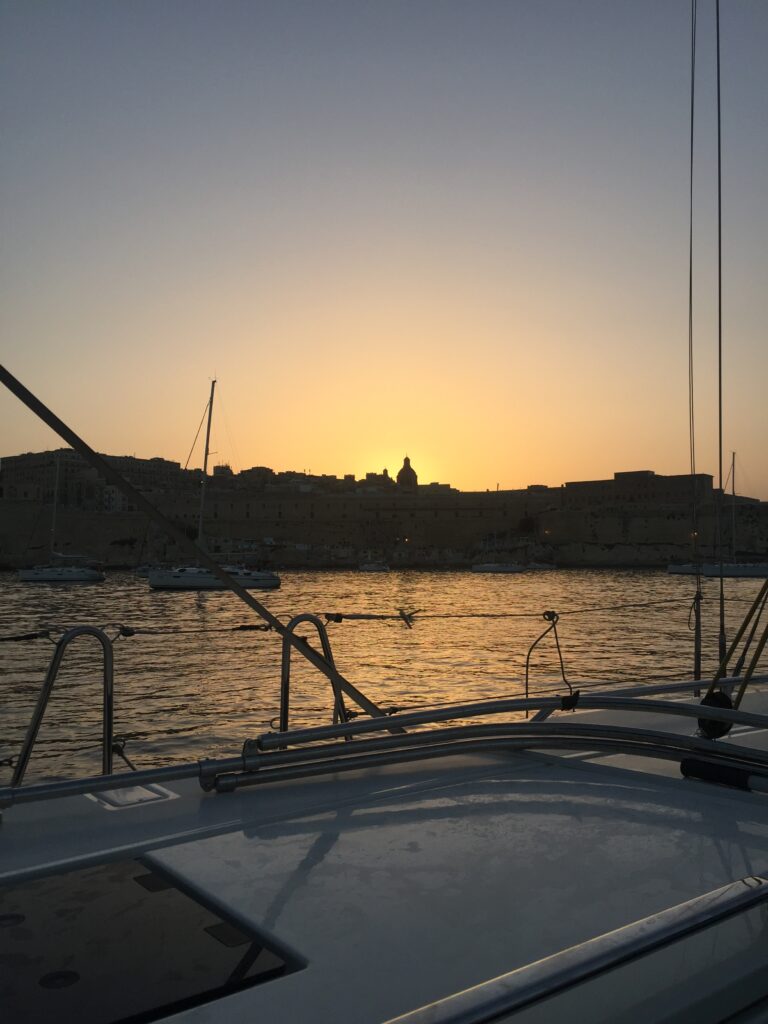
Private Sunset experience
Feel the soul of the sea, enjoy the extaordinary colors and landscapes of Maltese Islands during the loveliest hours of the day.
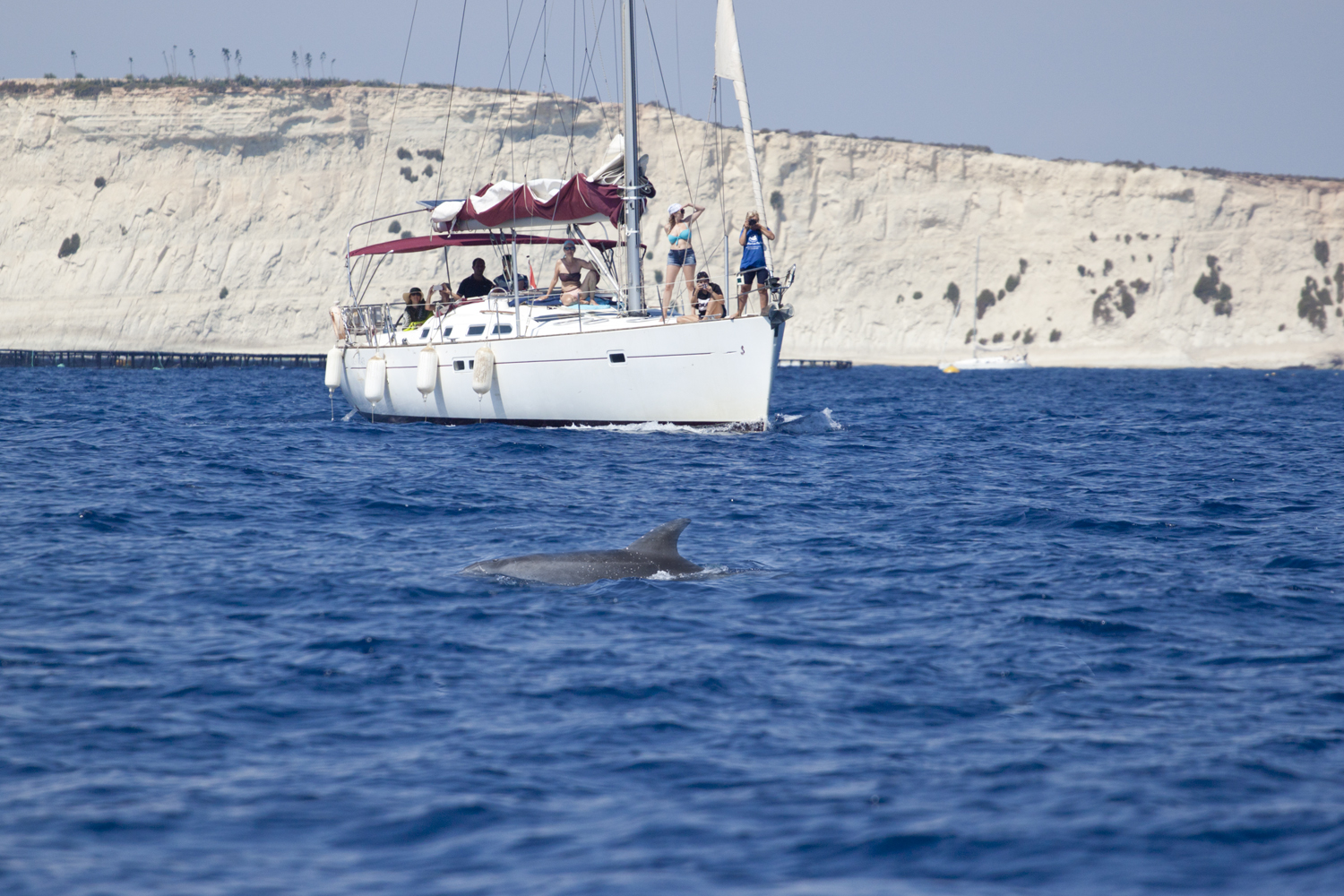
Private Marine life spotting
Enjoy a private marine life spotting experience with your loved ones. A day at sea to relax, reconnect, and discover Malta’s marine life.
Shared Marine life spotting
Discover Malta’s marine environment on a shared boat tour with other guests. Enjoy a relaxing day at sea while spotting marine life along the way.