
Gilthead seabream
Scientific name: Sparus aurata
Suborder: Percoidei
Genus: Sparus
Family: Sparidae
Habitat: Coastal marine waters; commonly found in lagoons, estuaries, and over sandy or seagrass bottoms, close to the seabed.
Average weight: 300-450 g
Max length: 0.7 m
The gilthead seabream is commonly found in the Mediterranean Sea, where it inhabits coastal marine waters, including lagoons and estuaries. It is typically associated with sandy or seagrass bottoms and is classified as a demersal species, meaning it lives close to the seabed. Juveniles are usually found in shallow waters, up to depths of around 30 m, while adults may inhabit deeper areas of up to approximately 50 m.
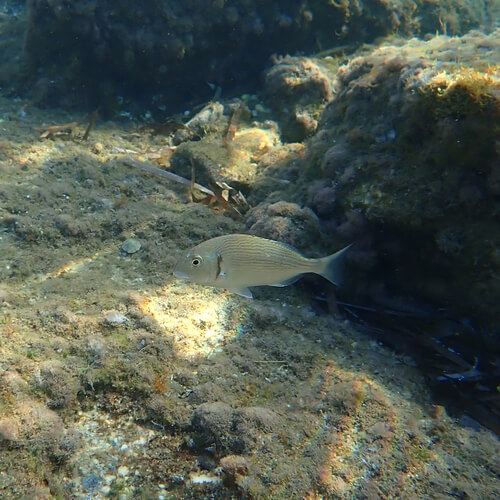
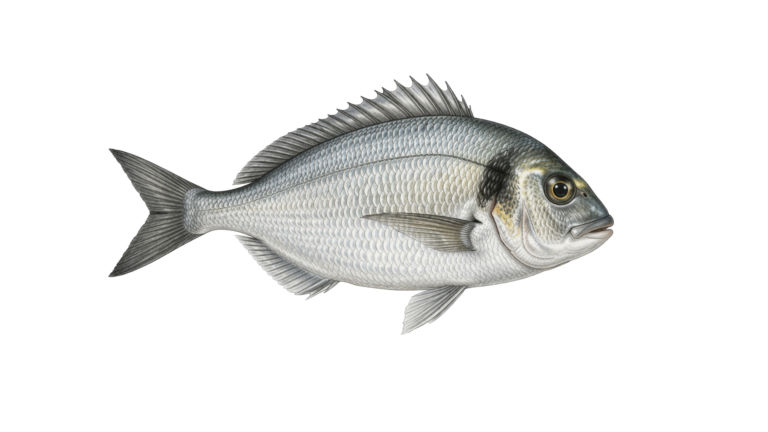
This species has a slightly more elongated body compared to other bream species and is generally bluish-green in colour. It possesses a long, spined dorsal fin characteristic of breams, along with a distinct black mark on the gill cover, while the tail is also dark, contributing to its recognisable appearance.
As a bottom-associated species, the gilthead seabream primarily feeds on benthic organisms such as small crustaceans. However, its diet can also include seagrass and other marine vegetation, making it an opportunistic feeder. Furthermore, this species is a protandrous hermaphrodite, meaning individuals begin life as males and later change into females as they grow. Gilthead seabream typically reach sexual maturity between 2 and 3 years of age. Females are batch spawners and are capable of releasing between 20,000 and 80,000 eggs per day over a spawning period that can last up to four months.
The gilthead seabream is a highly valued culinary species. Combined with the relatively low cost of feeding, high survival rates, and strong market demand, it is considered highly suitable for large-scale aquaculture production.
Broodstock are obtained either from existing farms or captured from the wild and maintained in hatcheries. A broodstock unit typically consists of breeders of different ages, ranging from one-year-old males to five-year-old females. At the beginning of the breeding season, selected breeders are transferred from long-term holding facilities to spawning tanks. The control of sex ratio within these tanks is a critical factor in gilthead seabream reproduction, as sex reversal is socially influenced. Spawning can also be induced outside the natural season through the manipulation of environmental conditions such as temperature and photoperiod.
Two main systems are used for larval rearing: small-scale and large-scale. The small-scale system allows for maximum control of environmental parameters and generally produces a higher number of juveniles. In contrast, the large-scale system more closely mimics natural conditions, resulting in fewer but often higher-quality larvae.
Gilthead seabream can be farmed using various methods, including coastal ponds and lagoons, land-based systems, and offshore sea cages. Around the Maltese coast, sea cages are commonly used. The early rearing and pre-fattening stages usually take place in land-based facilities, while the grow-out phase occurs in sea cages. During this stage, juveniles are fed either manually or via automatic feeders at regular intervals, often every two hours. They remain in these cages for approximately one to one and a half years until they reach market size.
Prior to harvesting, the fish undergo a period of starvation, the duration of which depends on water temperature and feeding rates. Once adequately starved, the seabream are removed from the cages using vacuum pumps or dip nets. They are typically slaughtered by thermal shock, achieved by immersion in ice-cold water saturated with carbon dioxide, a method used to minimise stress and suffering.
Threats
What can we do?
Threats
What can we do?
Experiences you may enjoy
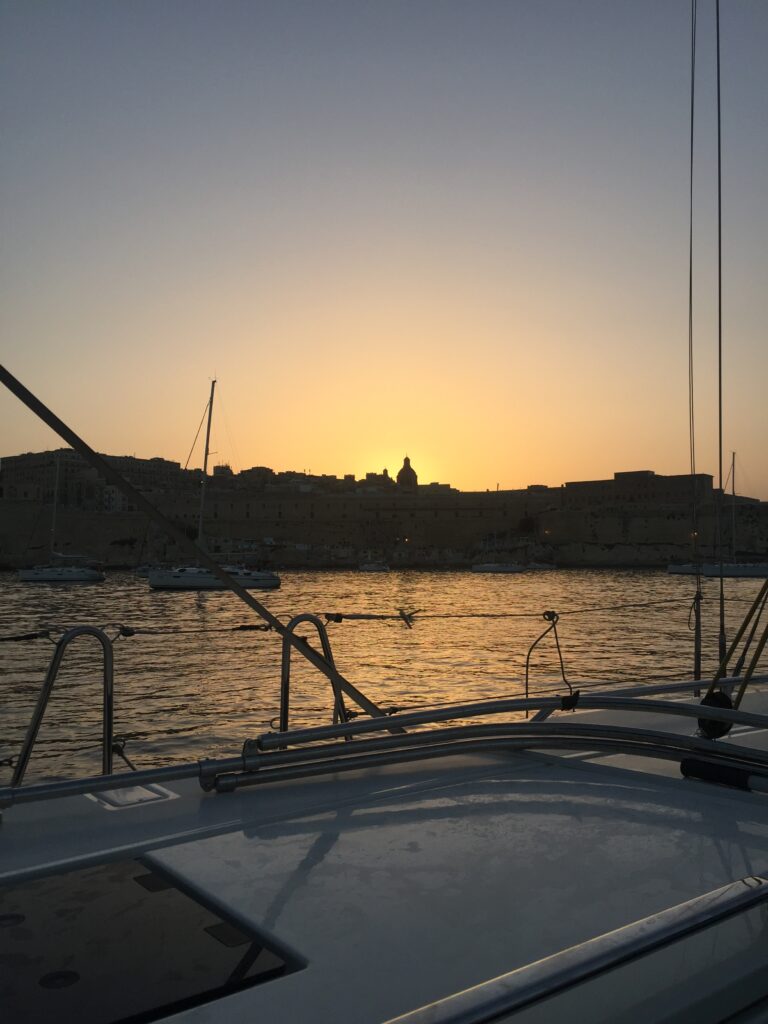
Private Sunset experience
Feel the soul of the sea, enjoy the extaordinary colors and landscapes of Maltese Islands during the loveliest hours of the day.
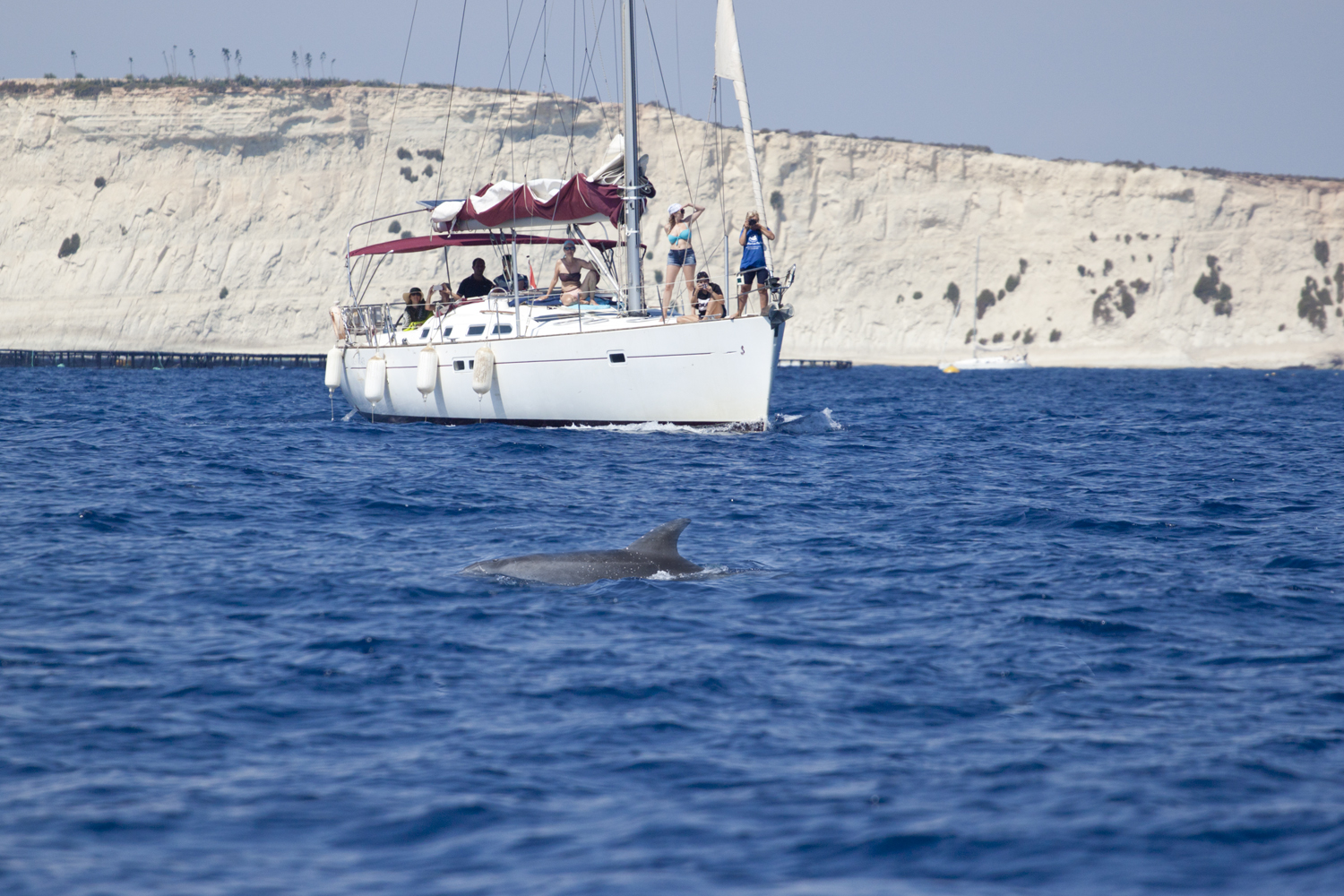
Private Marine life spotting
Enjoy a private marine life spotting experience with your loved ones. A day at sea to relax, reconnect, and discover Malta’s marine life.
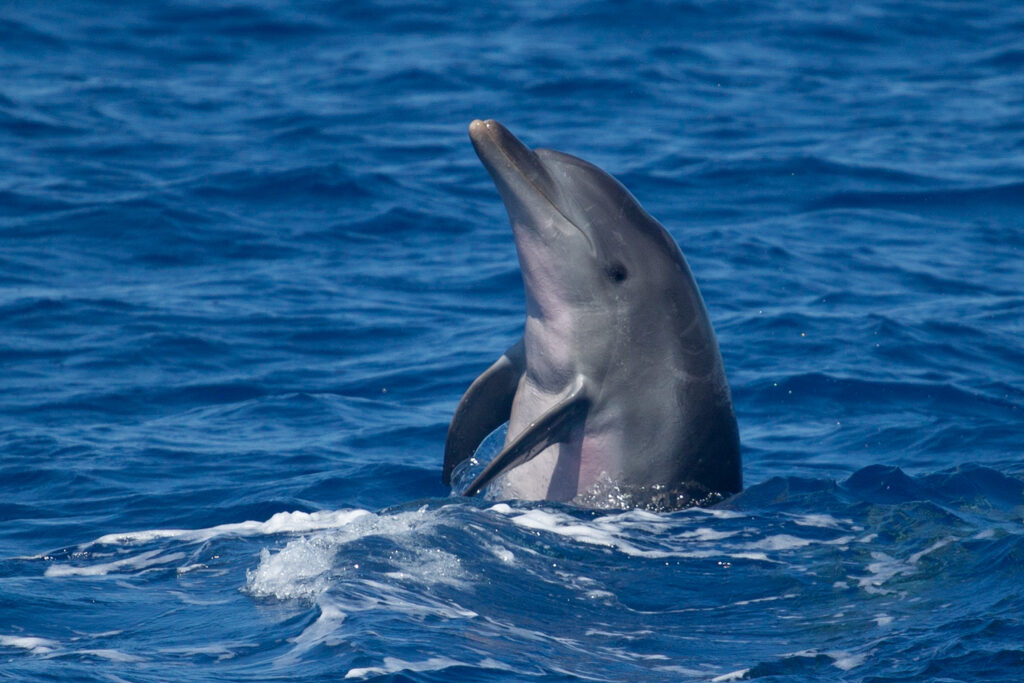
Shared Marine life spotting
Discover Malta’s marine environment on a shared boat tour with other guests. Enjoy a relaxing day at sea while spotting marine life along the way.