
On the south eastern tip of Malta, Xrobb l-Għaġin feels like a place where time slows down. Here, cliffs plunge into the sea, natural inlets open like secret doorways, and the horizon stretches endlessly blue. It’s a landscape that combines raw nature with deep history — a place to walk, breathe, and reconnect.
The Two Natural Inlets
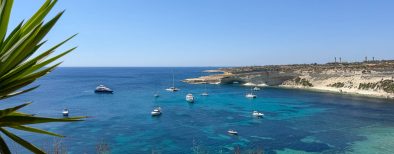
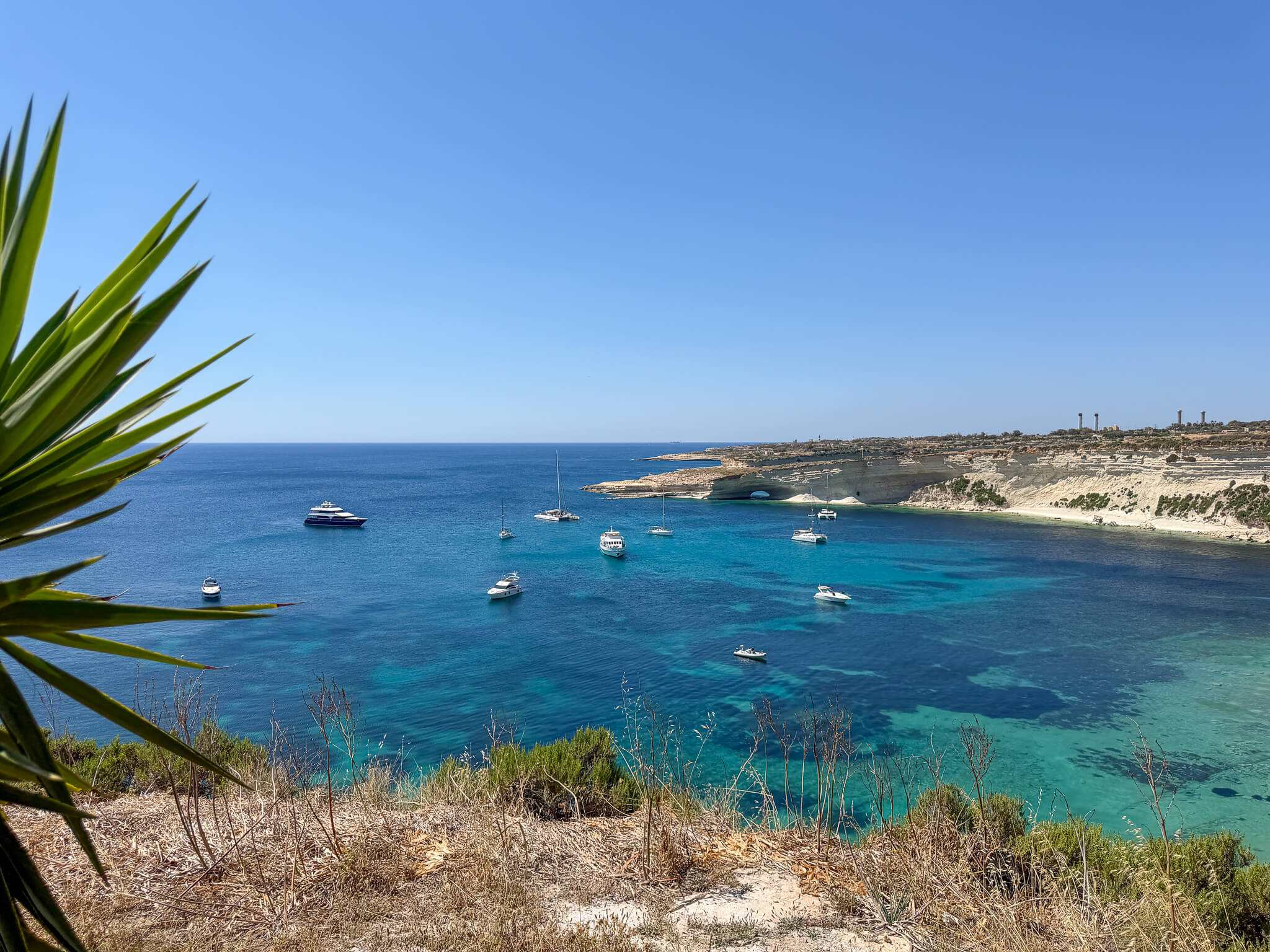
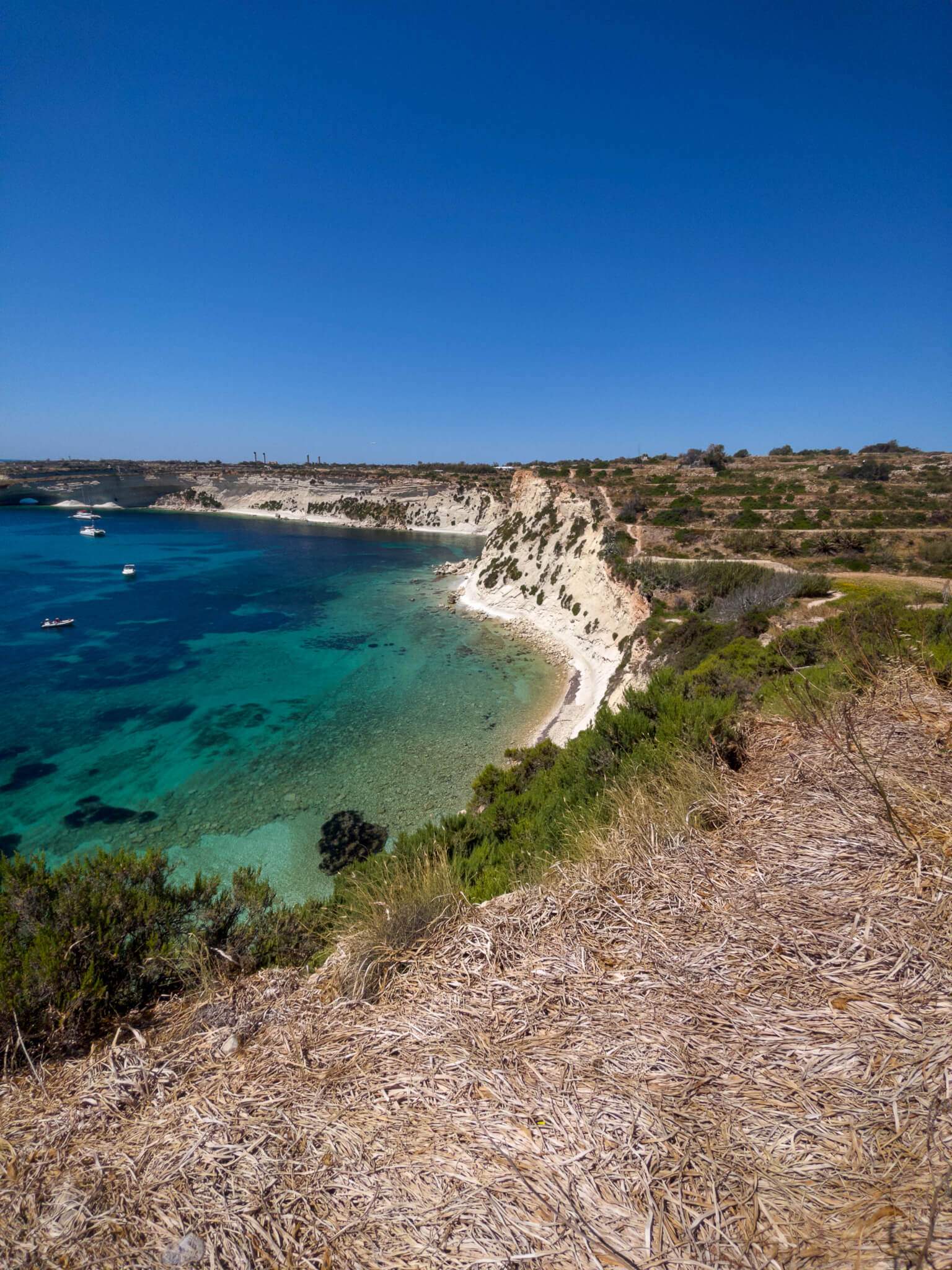
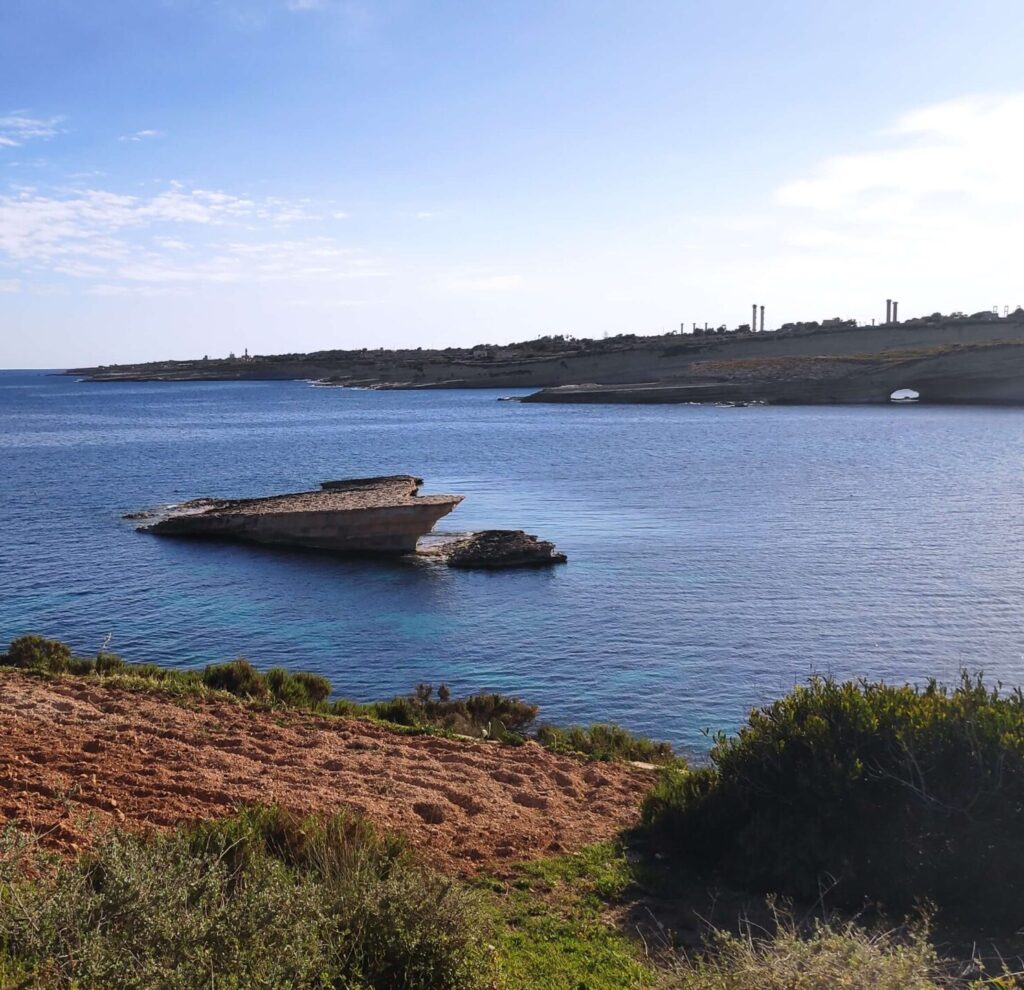
Tucked into the coastline of Xrobb l-Għaġin are two natural inlets known as — Hofra il-Kbira (the large bay) and Hofra il-Gżira (the small bay). Each provides a sheltered spot shaped by natural erosion and the unique geology of the coastline. The very name “Hofriet” captures the magic of this place — a natural window carved by the sea, linking the two bays and opening out toward the horizon. Seen from the cliffs above or from the water below, it feels like nature has framed its own masterpiece.
For locals, these inlets are more than just swimming spots. They are places to come before work, or at the end of the day, to recharge, reflect, and find peace by the sea. As visitors, we are guests here, and with a little care, we can help keep the bays as beautiful as we found them by taking every bit of litter back with us and leaving the rocks, plants, and water just as they are, for others and for the creatures that live here. By showing respect, you don’t just preserve the landscape — you share in the spirit of the place, ensuring it remains a source of joy and renewal for both human and marine life.
The Hofriet Window
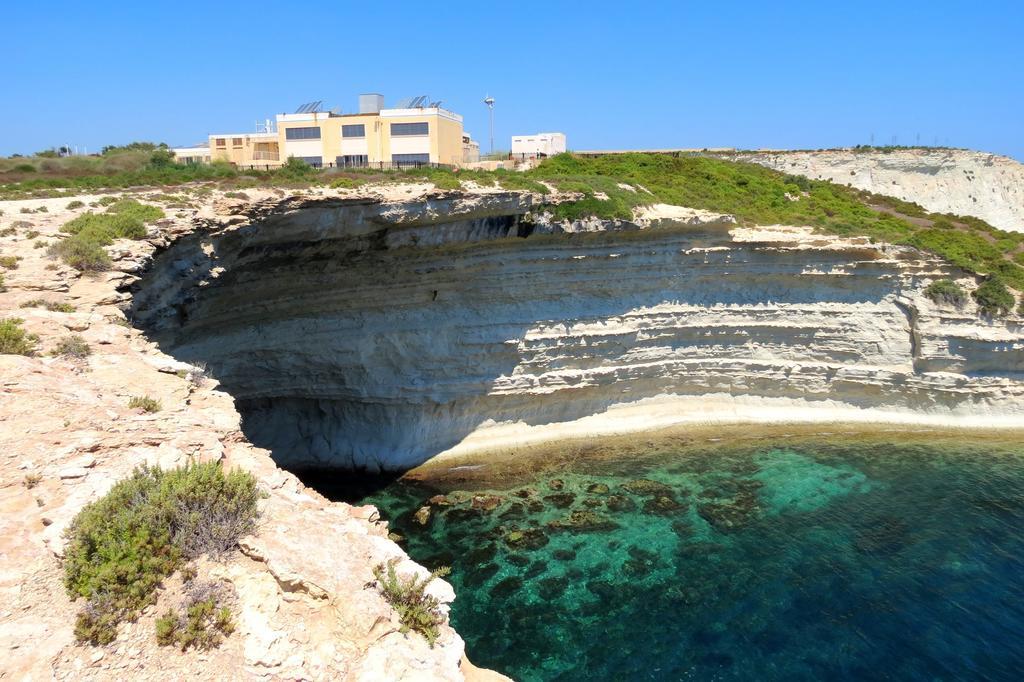
Between the two bays, nature has carved a striking limestone arch known as the Hofriet Window. This natural “looking glass” connects the inlets and frames the Mediterranean beyond like a living painting. Formed over thousands of years by the erosion and collapse of limestone, it’s one of the most dramatic sights along the Delimara coastline.
A Landscape Shaped by Time
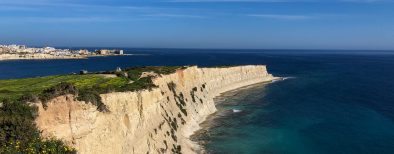
The cliffs around the Hofriet Window tell their own story. Layer upon layer of Upper Globigerina Limestone rises above the sea, each stratum shaped and reshaped over thousands of years by the steady work of wind and waves. Standing there, you can almost read the passage of time written into the rock.
The cliffs around the Hofriet Window tell their own story. Layer upon layer of Upper Globigerina Limestone rises above the sea, each stratum shaped and reshaped over thousands of years by the steady work of wind and waves. Standing there, you can almost read the passage of time written into the rock.
A Rich Marine Environment
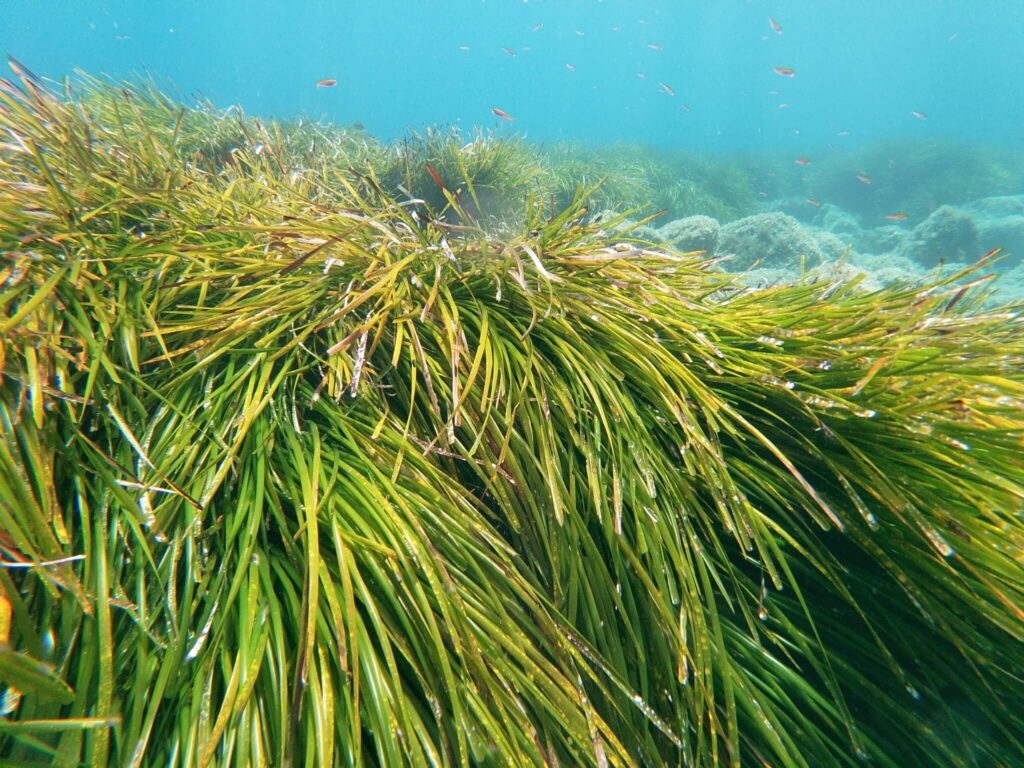
Both Hofra il-Kbira and il-Gżira are wonderful places to slip into the water and discover the richness of Malta’s marine life. With a mask and snorkel, you can drift above seagrass meadows, watch small fish dart between rocks, and feel that magical sense of being part of the sea. But timing makes all the difference. In the height of summer, these bays can be crowded and noisy, losing a little of their natural charm. The most rewarding moments come early in the morning, when the sea is still, the cliffs glow in the first light, and the only sounds are the waves and the seabirds. Outside of the busy season, the bays return to their true character: quiet sanctuaries where you can swim, breathe, and reconnect with nature. When you swim in the crystal-clear waters of Hofriet, you’ll notice two different marine environments. Close to shore, rocky bottoms are home to species adapted to shallow waters — colourful wrasses, damselfish, blennies tucked into crevices, and sea urchins clinging to the stone. But as you swim further, the landscape changes: long green ribbons appear, swaying with the currents. This is Posidonia oceanica or Neptune grass. Endemic to this sea and found nowhere else in the world, Posidonia meadows are a vital carbon sink, helping to fight climate change by locking away carbon in their roots and sediments for thousands of years.
Nearby Heritage
High atop the eroding cliffs of Xrobb l‑Għaġin, archaeologists have uncovered remains of a prehistoric megalithic temple, dating between 3600–3000 BC. Initially excavated in the early 20th century, the site is now being carefully studied and preserved, even as portions continue to slide toward the sea.
In the area is also possible to admire the remains of a 17th-century coastal defense tower, the De Redin Watchtower, once part of a chain that guarded Malta’s shores.
Nature Park & Conservation
Spread across over 155,000 m², the Xrobb l‑Għaġin Nature Park and Sustainable Development Centre is more than a green space—it’s a compass pointing toward a better future. It’s where rainwater is harvested, solar panels and wind turbines power learning, and local garigue, steppe, and cliff communities flourish. Within the park, the Turtle Rescue Centre is a conservation hub within the park dedicated to rehabilitating injured sea turtles before releasing them back into the wild.
How to get there
By Car
Reach the Delimara Peninsula by following local roads from Marsaskala or Marsaxlokk.
From there, continue toward the Xrobb l-Għaġin Nature Park entrance.
By Public transport
Take a bus to Marsaskala or Marsaxlokk. From either location, you will need to continue on foot toward the Delimara Peninsula.
From St. Thomas Bay (Marsaskala) follow the coastal path past Munxar then continue to Xrobb l-Għaġin.
From Marsaxlokk follow the peninsula past terraced fields and stone walls then reach the Xrobb l-Għaġin headland.
A Turtle's Tale
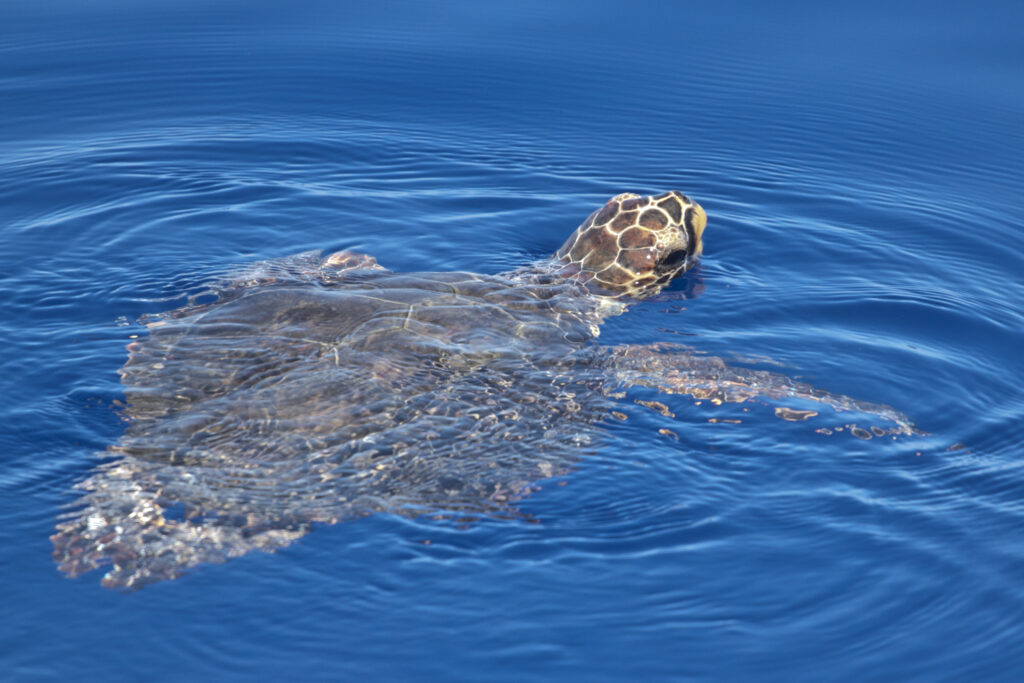
The Mediterranean is home to three species of sea turtles, but the most commonly spotted turtle is the loggerhead – Caretta caretta.
Within the Xrobb l-Għaġin park, you may find the Wildlife Rehabilitation Centre run by Nature Trust Malta. This centre is open to the public for visits. Several loggerheads are brought here with issues of plastic ingestion, fishing lines and hooks, or damage to their shell due to boat hits. Here they are given all the help they need to recover, and when possible released back into the sea.
Posidonia: Oxygen for Life
Posidonia oceanica isn’t seaweed — it’s a flowering plant that produces oxygen, captures carbon, and stabilises the seabed. One square metre can generate up to 18 litres of oxygen per day. Its meadows are essential for Mediterranean marine life.
The Best Moments to Visit the Bays
Il-Ħofra l-Kbira and il-Ħofra ż-Żgħira are at their best early in the morning or outside the summer rush, when the sea is calm and the atmosphere is quiet. Locals often come before or after work to relax in these peaceful inlets. Visitors can help preserve this tranquility by taking all litter back with them.