
Risso’s dolphin
Scientific name: Grampus griseus
Suborder: Odontoceti
Genus: Grampus
Family: Delphinidae
Habitat: Pelagic zone
Average weight: 400kg
Max length: 4m
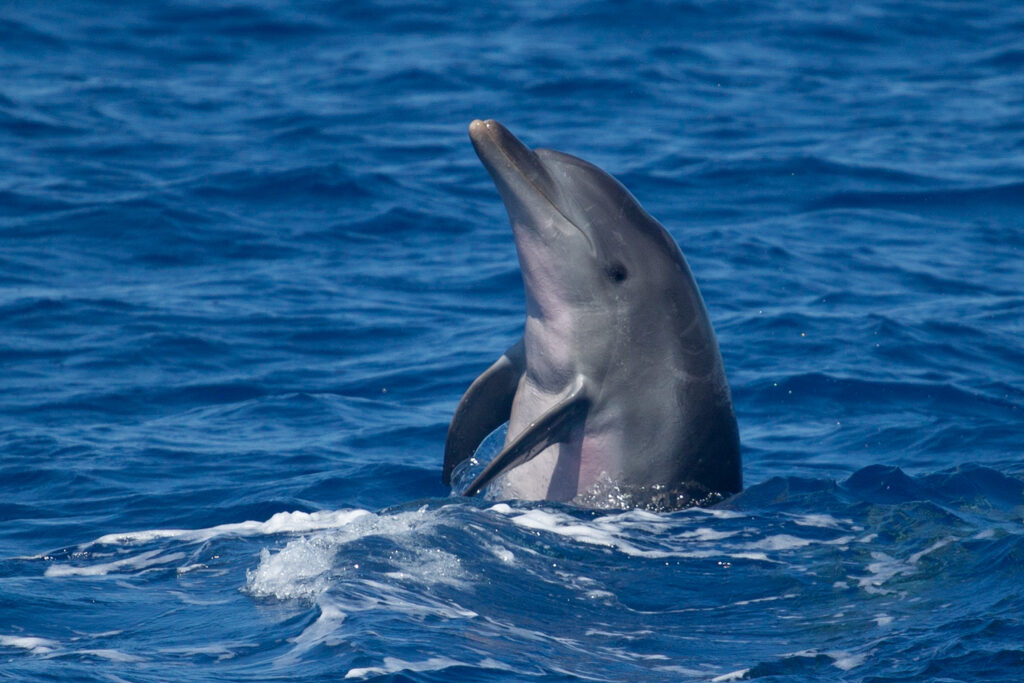
Risso’s dolphins, also sometimes called Gray dolphins generally prefer deeper offshore waters and can dive to a depth of at least 300m and hold their breath for up to 30 minutes but they usually prefer shorter dives. They are also very active on the surface of the water and can often be seen slapping their pectoral flipper or tails on the surface of the water, leaping out of the water, or popping their head vertically out of the water. This dolphin can be found in groups varying in size from 10 to 30 individuals, in groups of hundreds or thousands or found solitary. They have also been know to associate with other dolphins and whales.
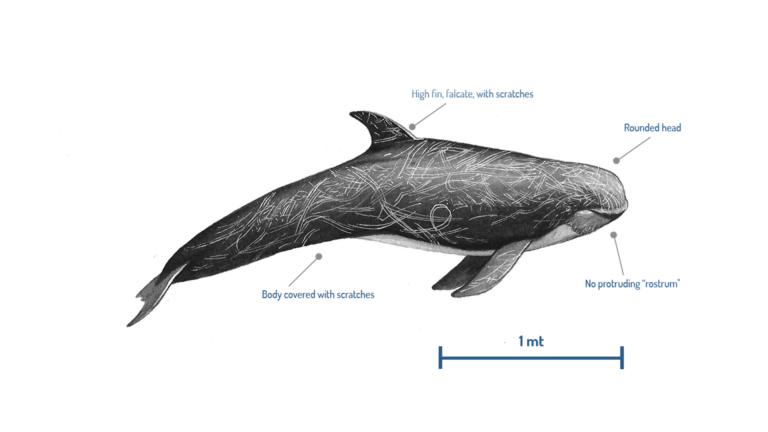
These medium sized cetaceans, have a robust body with a narrow tailstock, and a bulbous head with a vertical crease. They have a long, sickle-shaped dorsal fin located centrally in the middle of their back. Calves have little to no scaring on their dark grey body. As they age, however, their colouration lightens from black, dark grey, or brown to pale grey or almost white. Adult dolphins are usually inundated with scares due to scratches caused from teeth raking between dolphins, as well as circular markings from prey (e.g., squid), cookie-cutter sharks, and lampreys.
Unlike other cetaceans, Risso’s dolphins have between 2 to 7 pairs of peg-shaped teeth in the front of their lower jaw and one on the upper jaw. This is the lowest tooth count of all dolphin species.
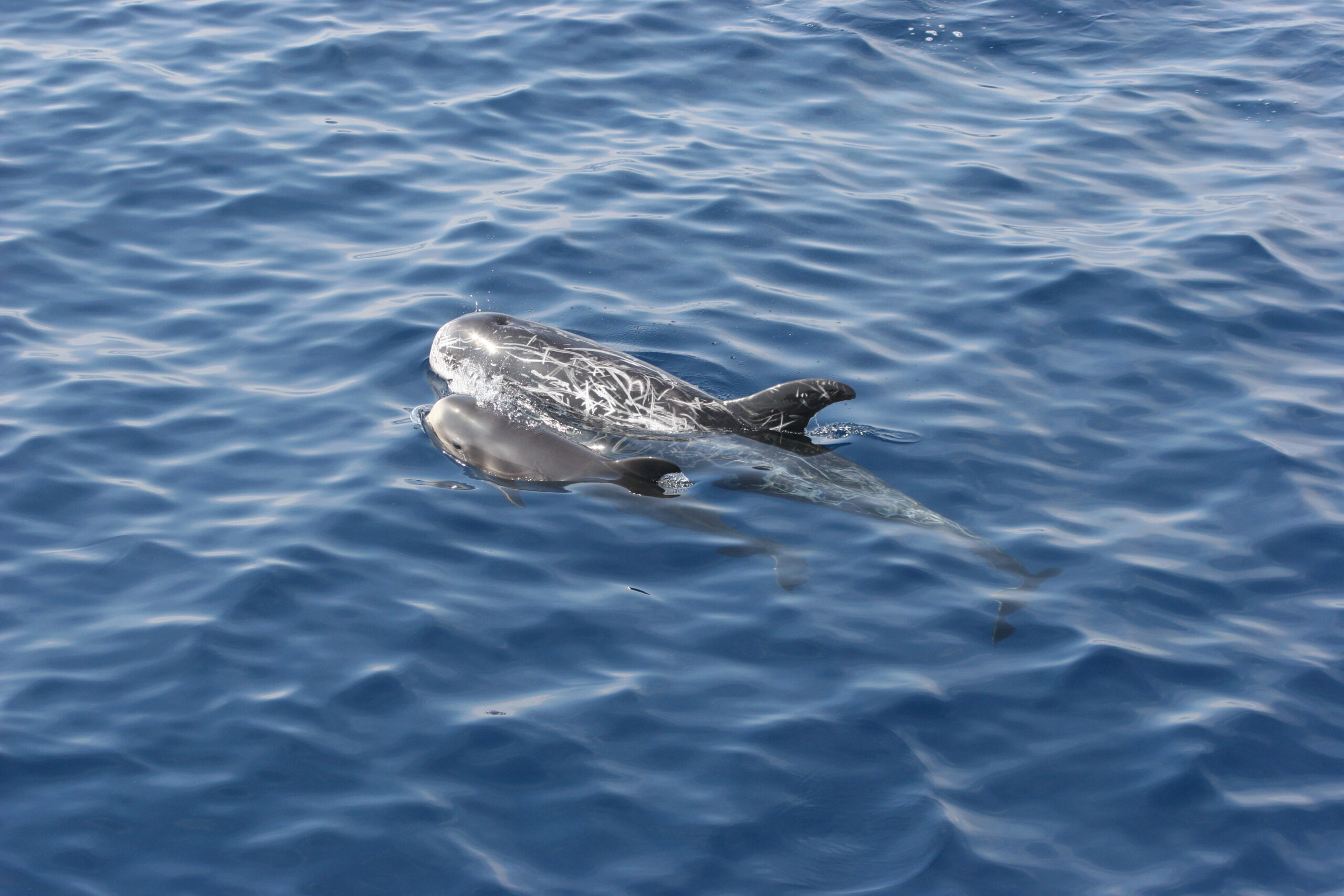
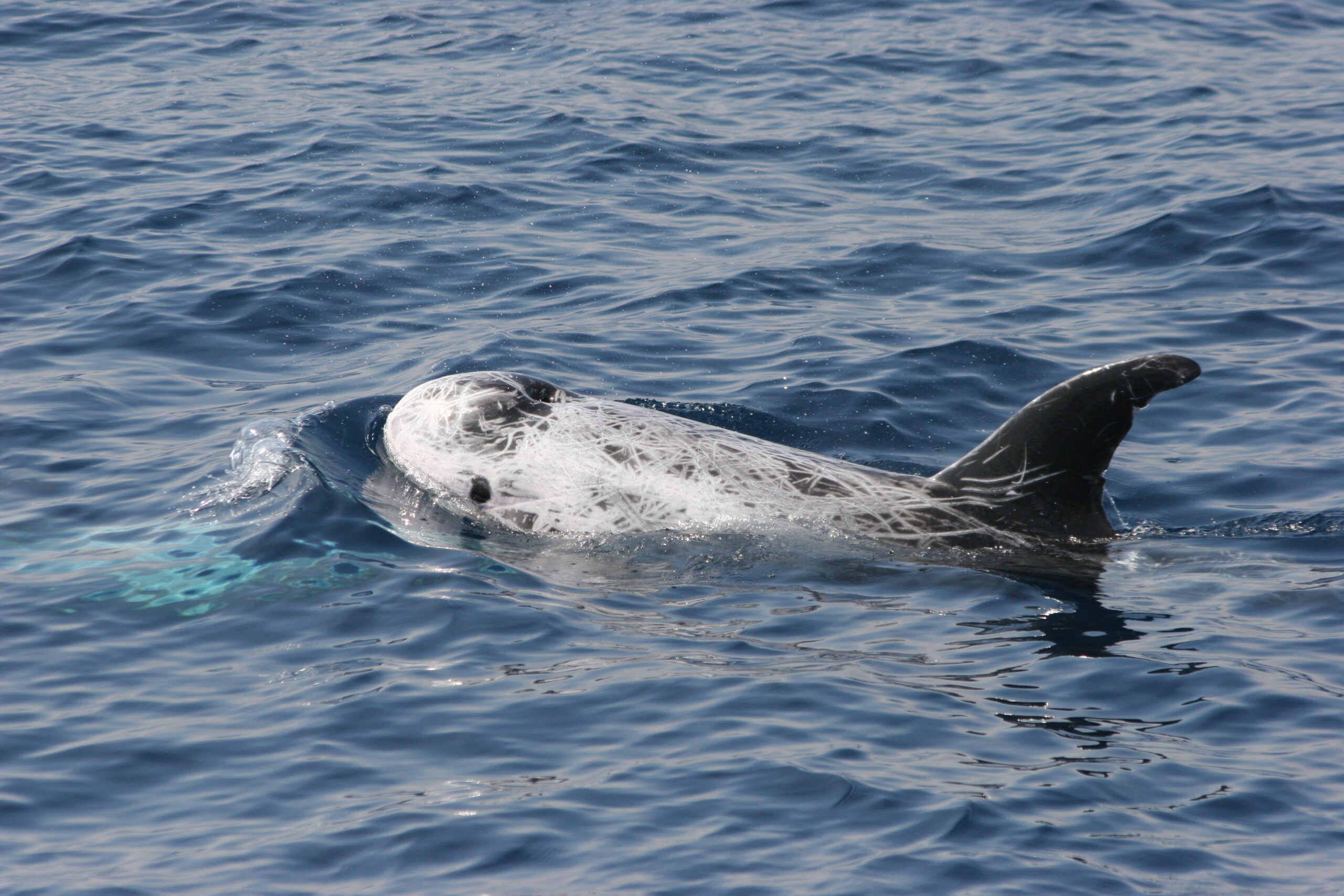
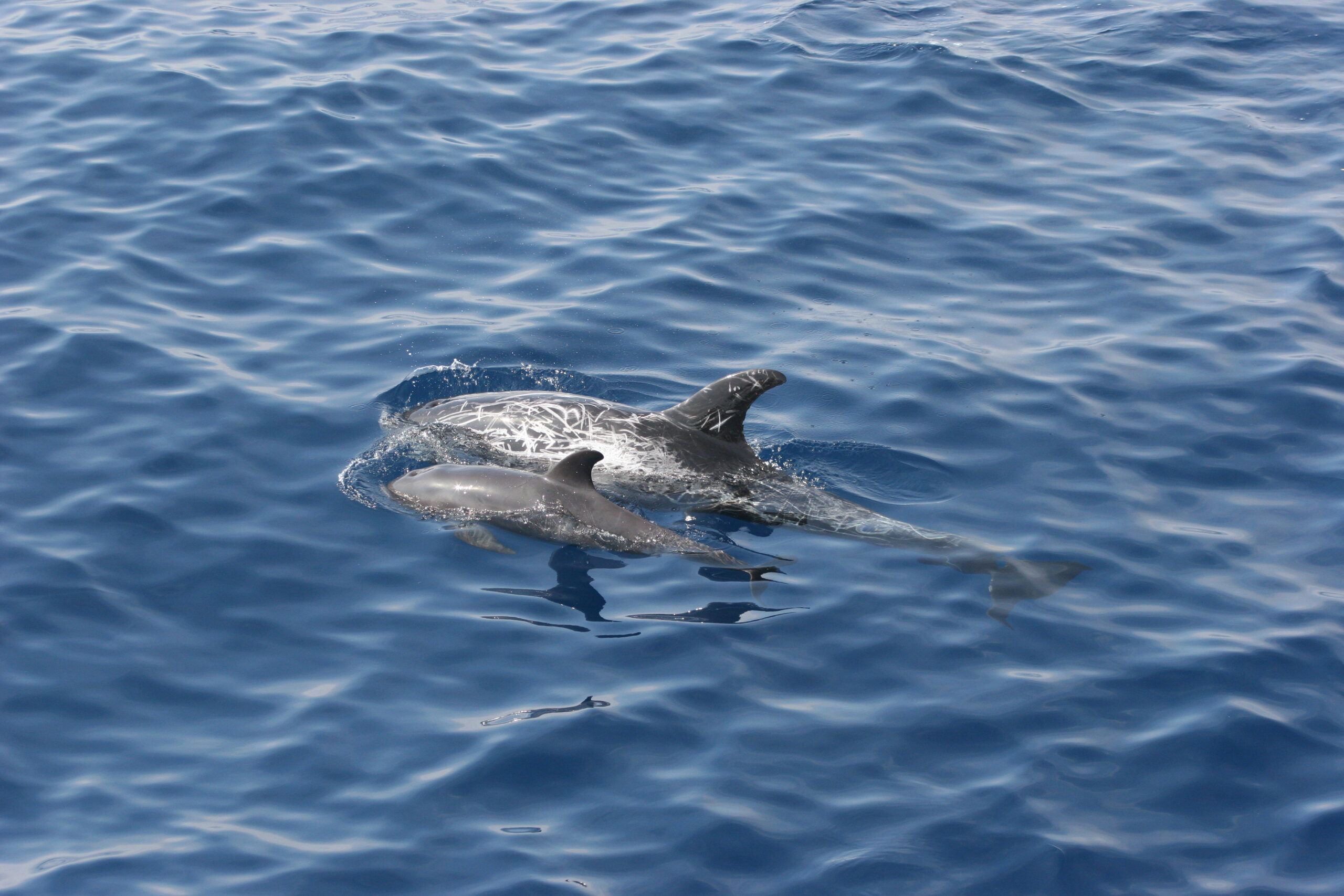
Risso’s dolphins typically feed at night on small fish such as anchovies, as well as krill and cephalopods including squid, cuttlefish, and octopus. They take advantage of the nightly vertical migration of their prey, which moves closer to the surface after dark.
This species is considered cosmopolitan, meaning it is found worldwide, although it generally prefers temperate waters. Risso’s dolphins can live for up to 35 years and reach sexual maturity when they attain a body length of approximately 3 metres. The gestation period lasts between 13 and 14 months, and calves measure about 1 to 1.5 metres in length at birth.
Unfortunately, Risso’s dolphins are often found entangled in, or accidentally caught by commercial fishing gear such as gillnets, longlines, and trawls. In some regions they are also hunted for human consumption for their meat and oil. Additional threats include ocean noise, which can disturb their behaviour and in some cases contribute to strandings, as well as chemical contaminants that accumulate in marine ecosystems. As top predators, Risso’s dolphins are particularly vulnerable to bioaccumulation of these pollutants, some of which are known to affect their immune and reproductive systems.
Threats
What can we do?
Threats
What can we do?
Threats
What can we do?
Experiences you may enjoy
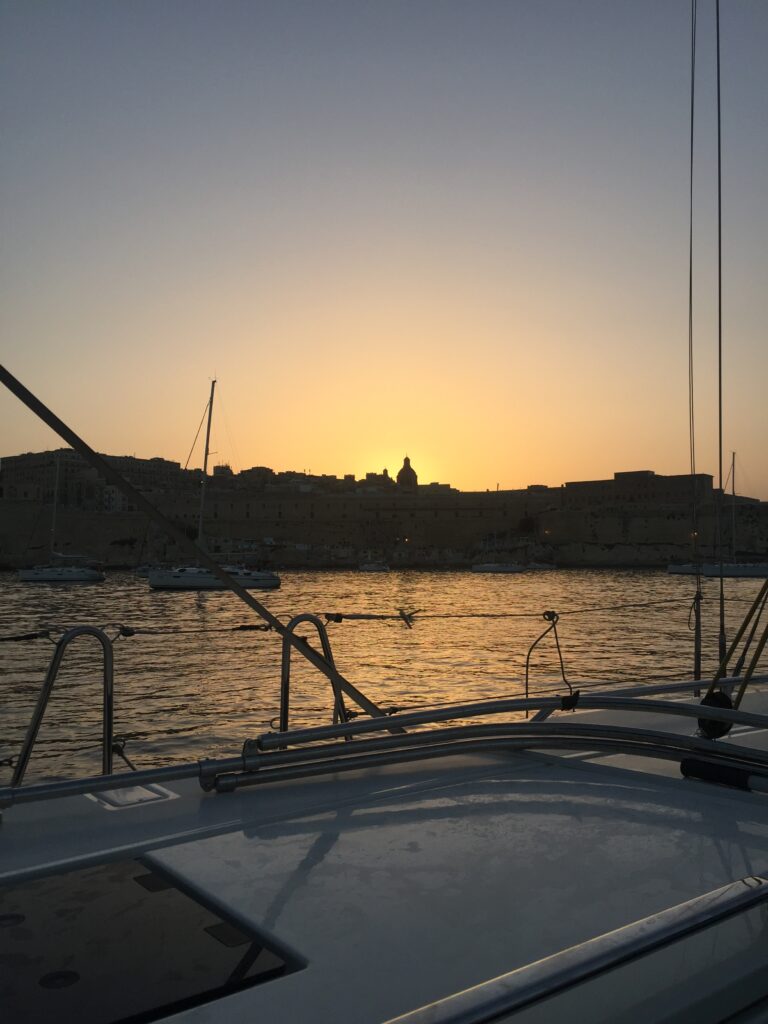
Private Sunset experience
Feel the soul of the sea, enjoy the extaordinary colors and landscapes of Maltese Islands during the loveliest hours of the day.
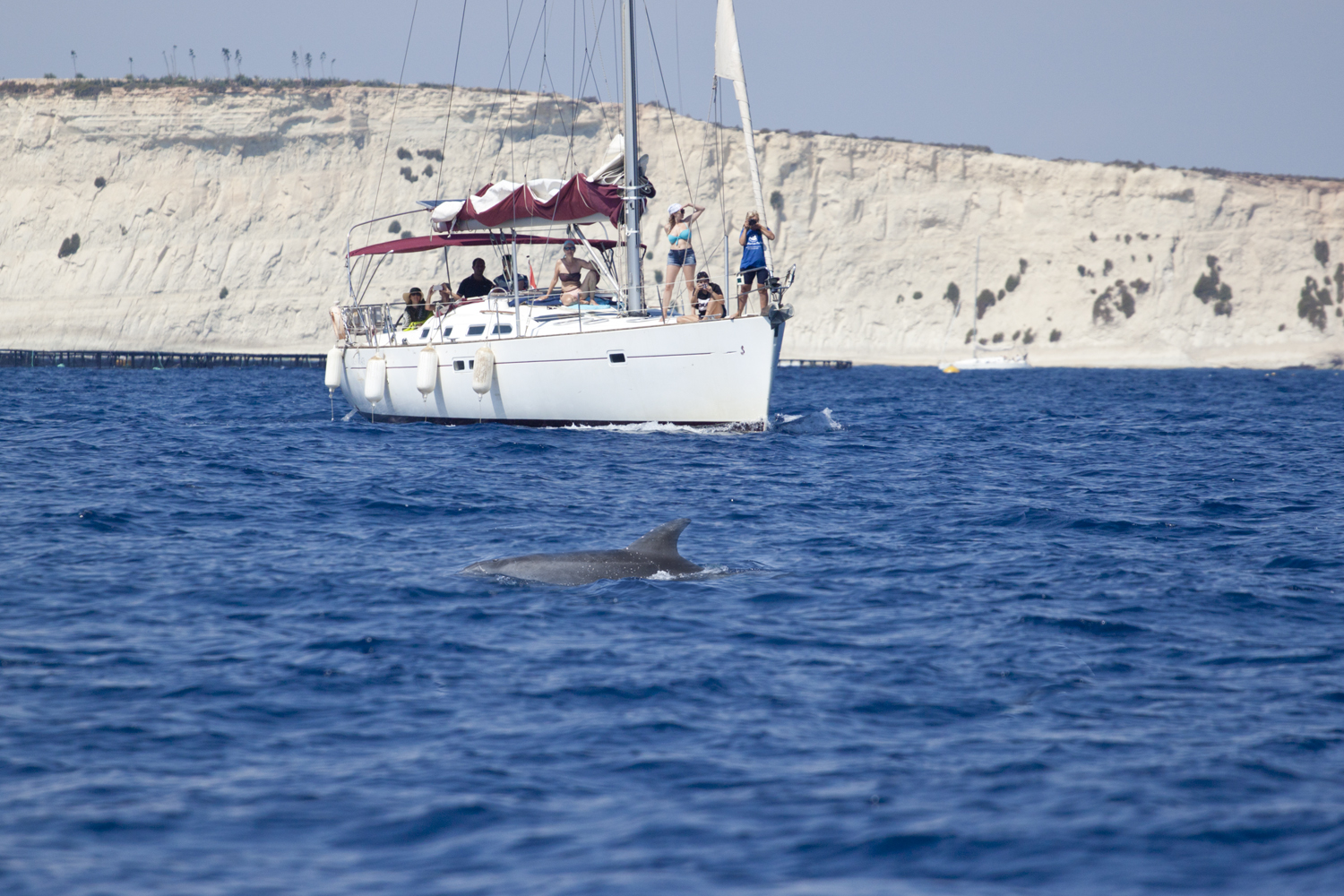
Private Marine life spotting
Enjoy a private marine life spotting experience with your loved ones. A day at sea to relax, reconnect, and discover Malta’s marine life.
Shared Marine life spotting
Discover Malta’s marine environment on a shared boat tour with other guests. Enjoy a relaxing day at sea while spotting marine life along the way.