
Long-finned pilot whale
Scientific name: Globicephala melas
Suborder: Cetacea
Genus: Globicephala
Family: Delphinidae
Habitat: Pelagic zone
Average weight: 2,000kg
Max length: 6.7m
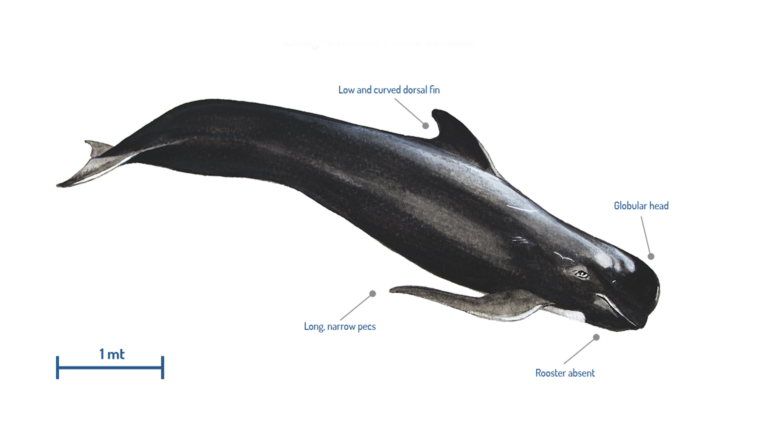
The long-finned pilot whale is a wide-ranging, medium-sized animal characterized by a sturdy blackish or brownish body. The large, rounded and exceptionally bulbous melon (forehead) is distinctive for this species. Pectoral fins are long and sickle-shaped, while the dorsal fin is low in profile, which in males is extremely wide and broad based.
When an individual spy hops (rise vertically, lifting their heads and eyes above the water’s surface), a light grey or white anchor-shaped patch on the chest and the straight mouthline angled upwards are clearly visible. Adults measure from 4 to 6.7 meters for a weight that varies between 1.3 to 2.3 tons.
This species is widely distributed in temperate to sub-polar waters in in the southern hemisphere and in the North Atlantic. In the Mediterranean sea, it occurs mainly in the western region, including the Strait of Gibraltar.
The diet mainly includes squid and other cephalopods, some small to medium-sized fish and occasionally shrimps. Long-finned pilot whales tend to feed at night at depths that range from 30 to 500m. Depending on region and prey, dive time can reach 16 minutes. Like other members of the delphinidae family, they use echolocation when searching for prey.
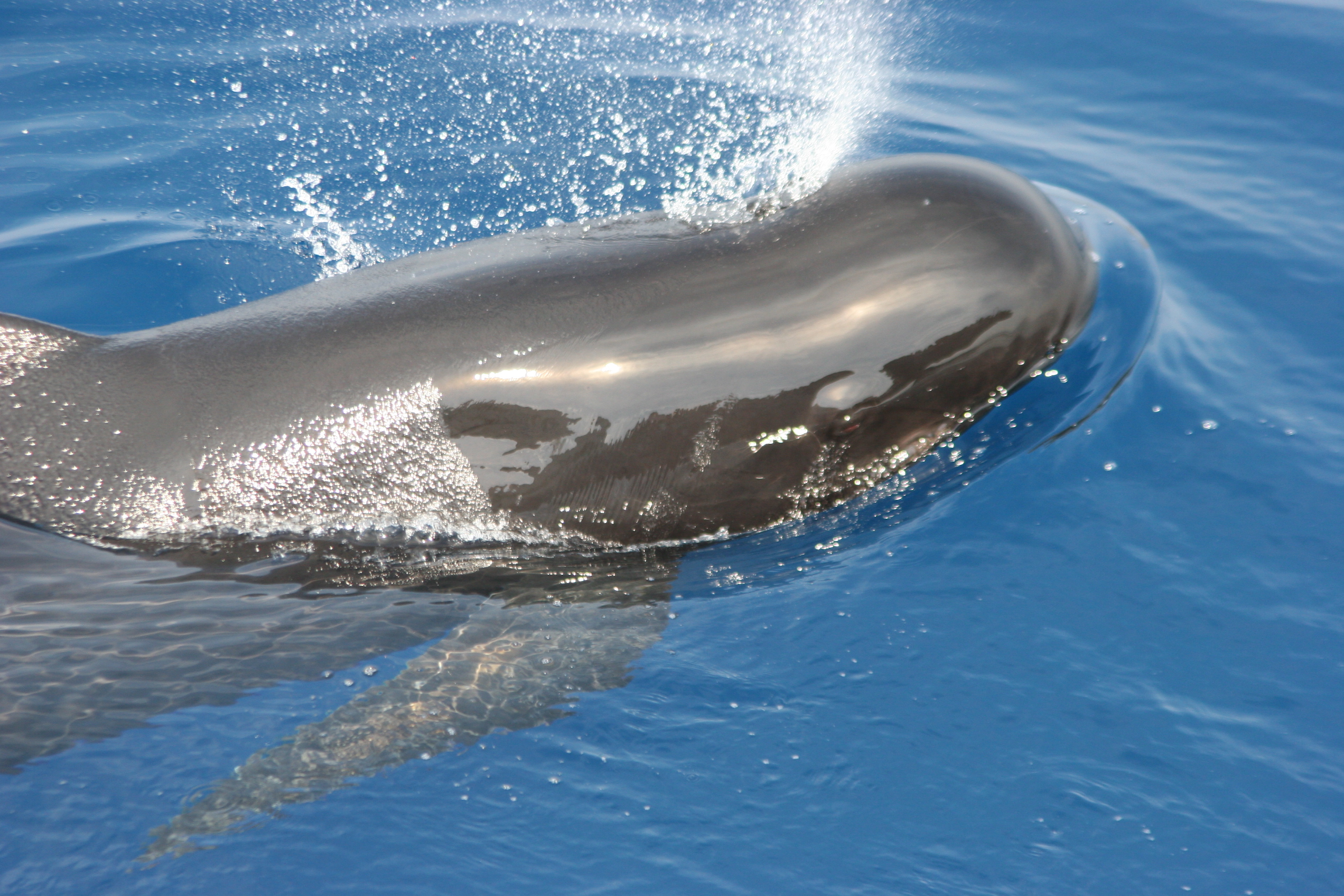
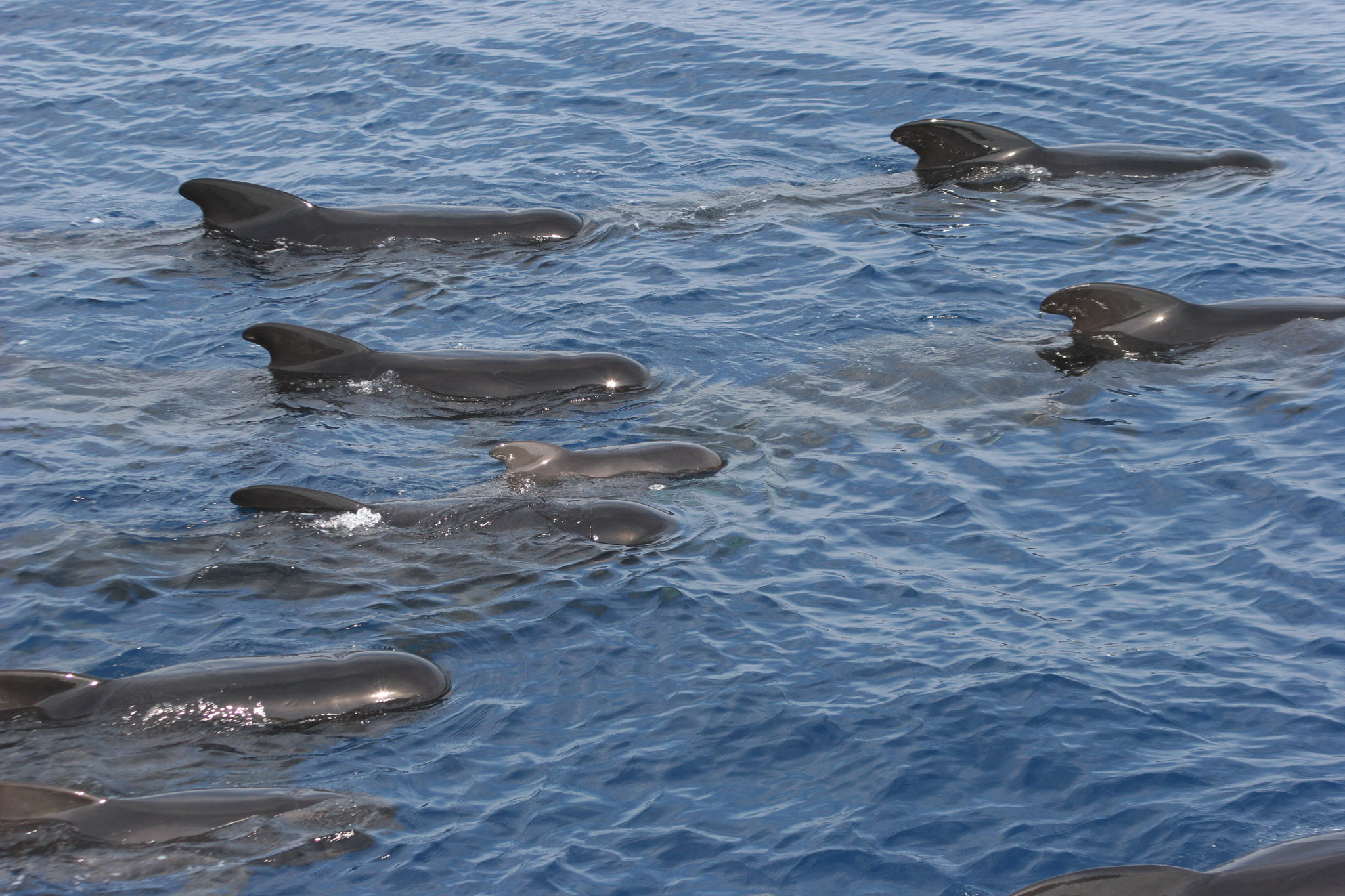
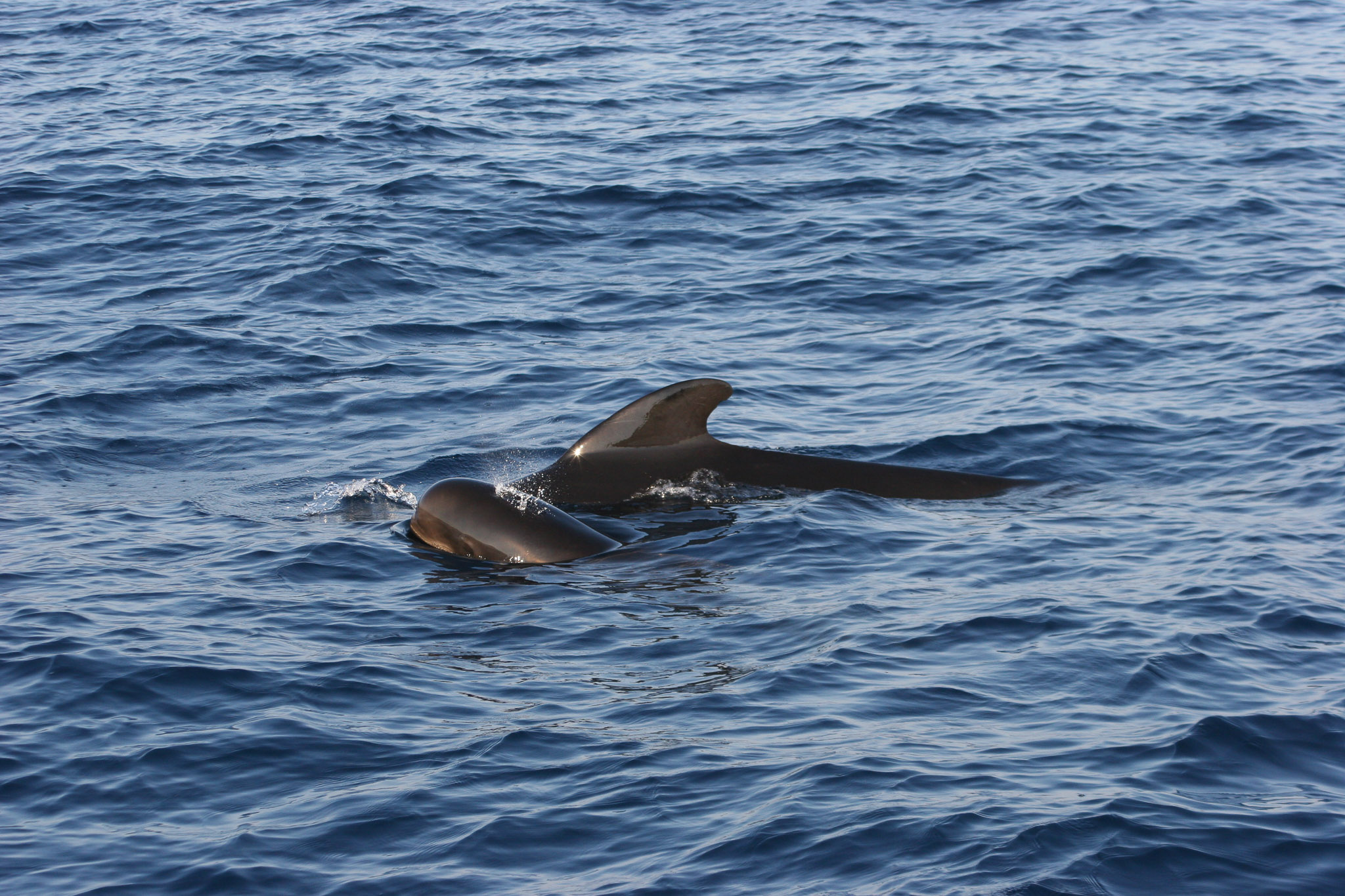
Long-finned pilot whales are commonly seen in tight, social pods and sub-groups of 10 to 20 individuals. These animals are nocturnal and spend their daytime hours resting and travelling. They are likely to be more active and social during the night, when they feed. They are known to associate with a variety of other dolphin and whale species, and to communicate acoustically using a complex repertoire of sounds.
The lifespan of pilot whales is 35 to 45 years for males and at least 60 years for females. Males become sexually mature at 12 to 13 years and the females at 8 years. Gestation lasts 15 months, and calving happens every 3 to 5 years, giving birth to a single calf during spring or summer. This is one of the longest known birth intervals of all cetaceans.
At birth, calves measure about 1.5 to 2 m and weigh about 80 kg. After 18 to 44 months, the calf stops nursing and is weaned by the cow. Older and/or non reproductive females help care for calves in the social group.
Long-finned pilot whales can become entangled in fishing gear, especially driftnets as well as trawls and longlines. Hunting still occurs in the North Atlantic, especially in the Faroe Island, where the highly controversial and cruel drive fishery, called grindadràp, happens every year, killing off hundreds of individuals each time. The tight social structure makes this species particularly vulnerable to this practice. As a top predator, this species is subject to the accumulation of contaminants and pollutants, harming the immune and reproductive systems.
Threats
What can we do?
Threats
What can we do?
Threats
What can we do?
Experiences you may enjoy
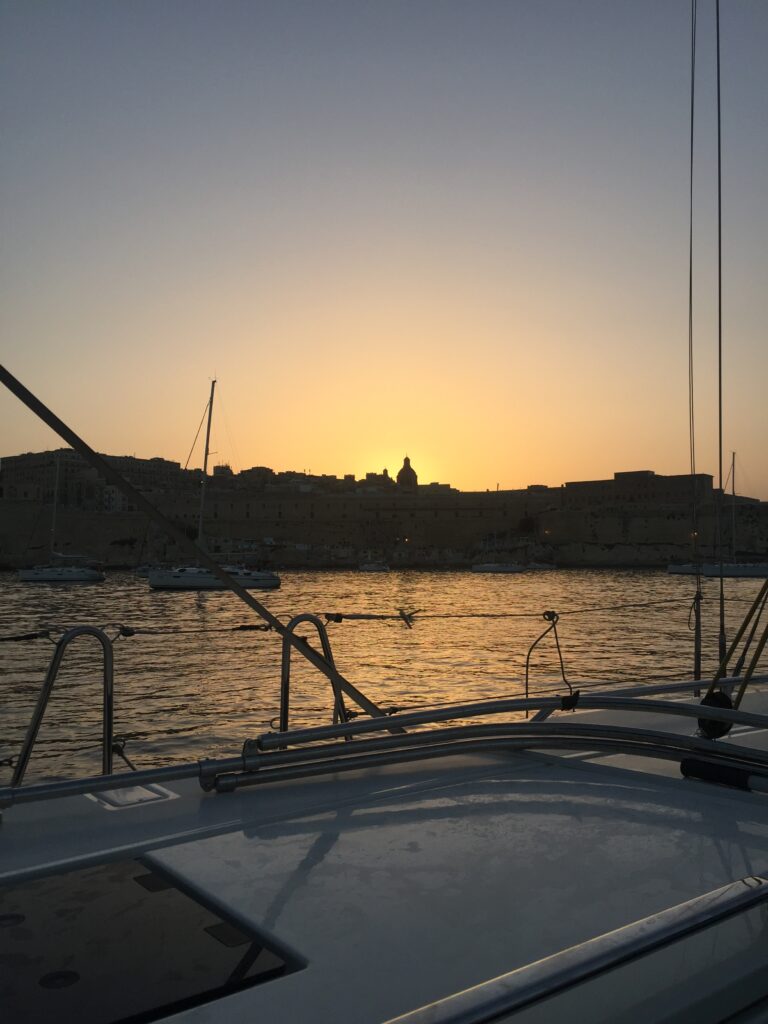
Private Sunset experience
Feel the soul of the sea, enjoy the extaordinary colors and landscapes of Maltese Islands during the loveliest hours of the day.
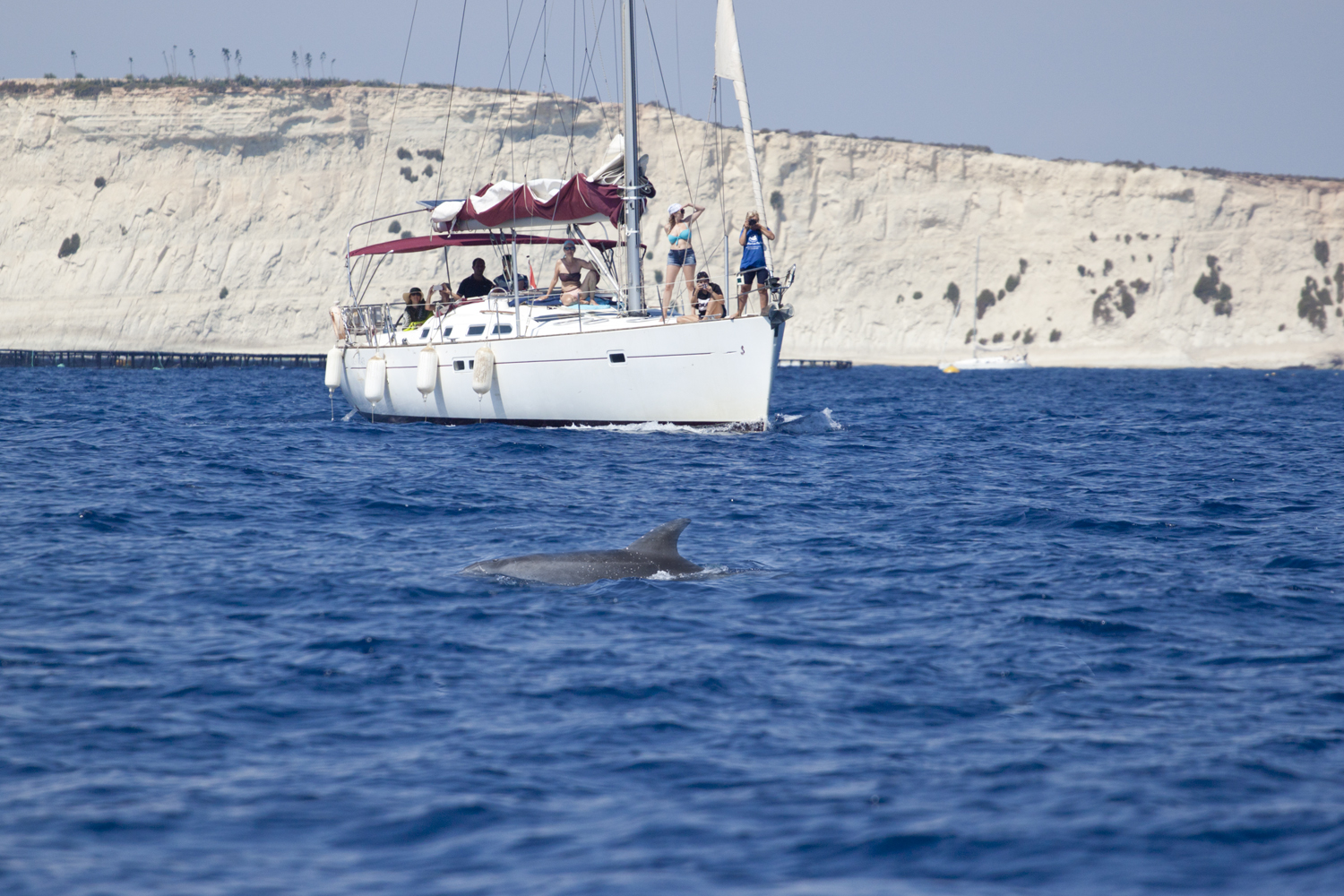
Private Marine life spotting
Enjoy a private marine life spotting experience with your loved ones. A day at sea to relax, reconnect, and discover Malta’s marine life.
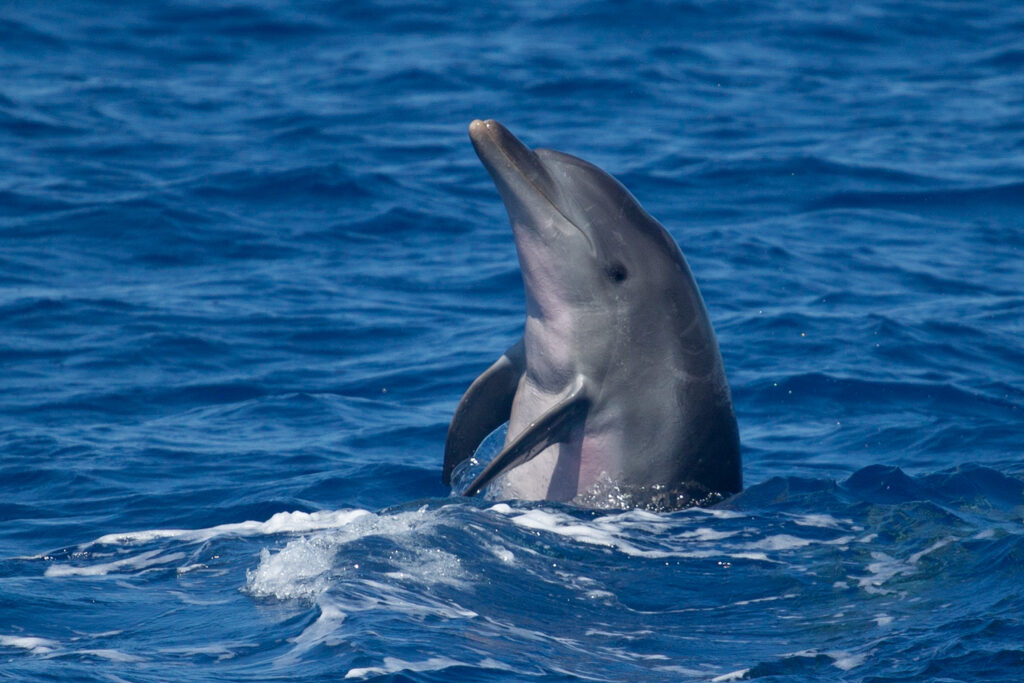
Shared Marine life spotting
Discover Malta’s marine environment on a shared boat tour with other guests. Enjoy a relaxing day at sea while spotting marine life along the way.