
Bull ray
Scientific name: Pteromylaeus bovinus
Suborder: Myliobatoidei
Genus: Pteromylaeus
Family: Myliobatidae
Habitat: Shallow, warm temperate to tropical coastal waters, preferring muddy, sandy-rocky seabeds. Also found in deep waters up to a depth of 500m
Average weight: 14 – 30 kg
Max length: 2.5 m
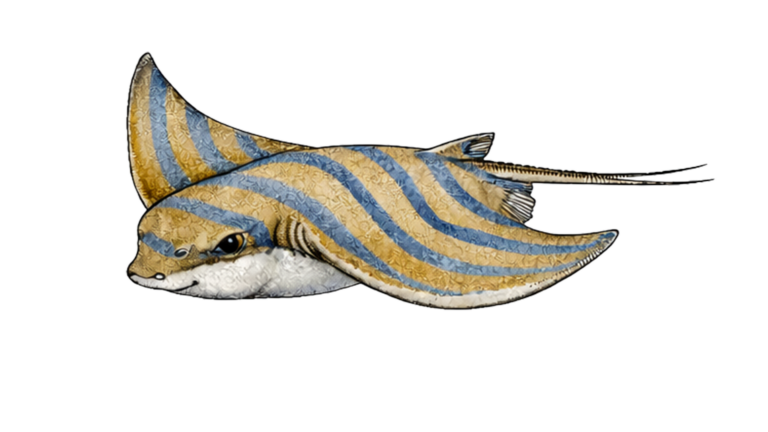
Bull rays, also known as duckbill eagle rays, are another species within the eagle ray family. They are easily distinguished from other eagle rays by the striking blue-striped pattern on their dorsal surface. Each individual has a unique pattern, allowing for reliable identification and long-term monitoring. This distinctive pattern also provides camouflage when the rays rest on the seabed. Similar to the common eagle ray, bull rays possess large triangular pectoral fins, a single dorsal fin, and a long, slender tail. They are characterised by a long, flat, rounded snout, from which their common name is derived. Their jaws consist of flat dental plates arranged in a hexagonal pattern rather than sharp teeth, an adaptation suited to feeding on crustaceans and molluscs such as shrimps and crabs. Each jaw contains seven rows of these plates, which are continuously replaced throughout the animal’s life.
Bull rays play a vital ecological role within marine ecosystems. As bottom feeders, they disturb and aerate the seabed while searching for food, a process that facilitates the establishment and growth of Posidonia and other seagrasses. Their presence is therefore considered an important indicator of seabed health, making them a valuable species for ecological monitoring.
This species is distributed throughout the Mediterranean Sea and along the west coast of Africa. Despite this wide range, bull rays have only recently become the focus of scientific research, and much remains to be learned about their distribution, abundance, migration patterns, and behaviour. It is already known, however, that the species is under significant threat from accidental capture as bycatch and from overfishing, and it is currently listed as Critically Endangered on the IUCN Red List. In Maltese waters, bull rays are also vulnerable to spearfishing, as their size and behaviour make them easy targets.
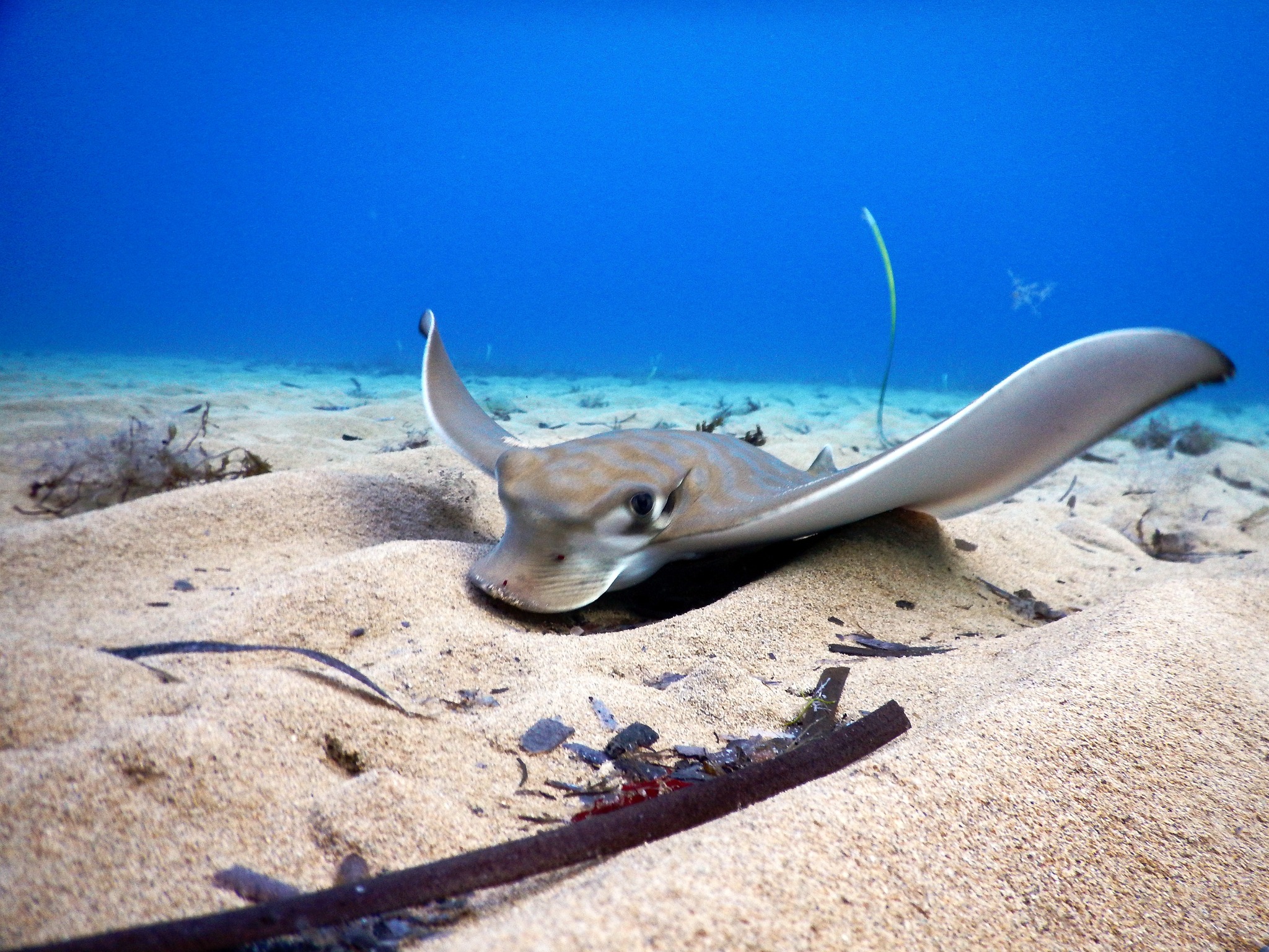
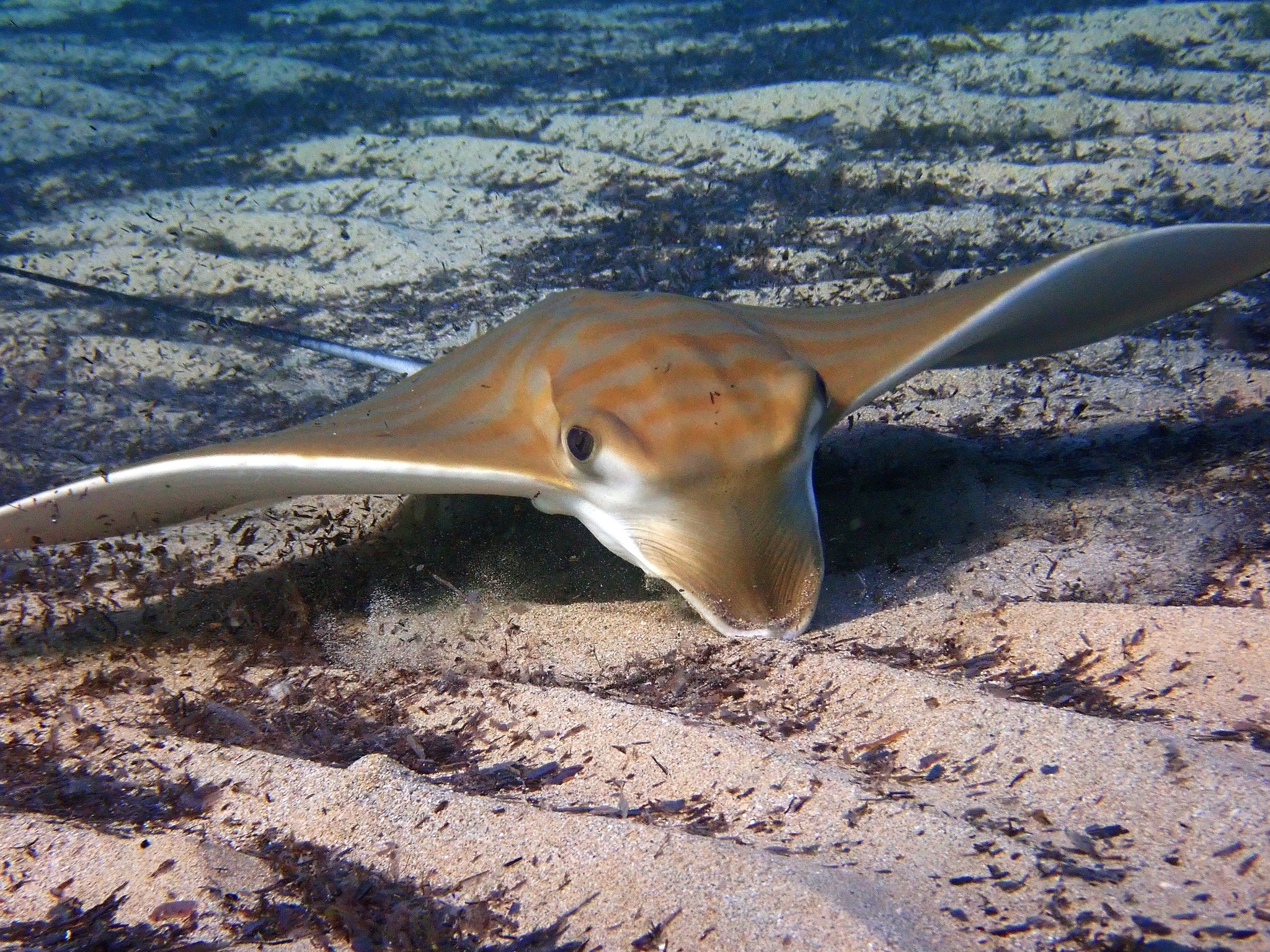
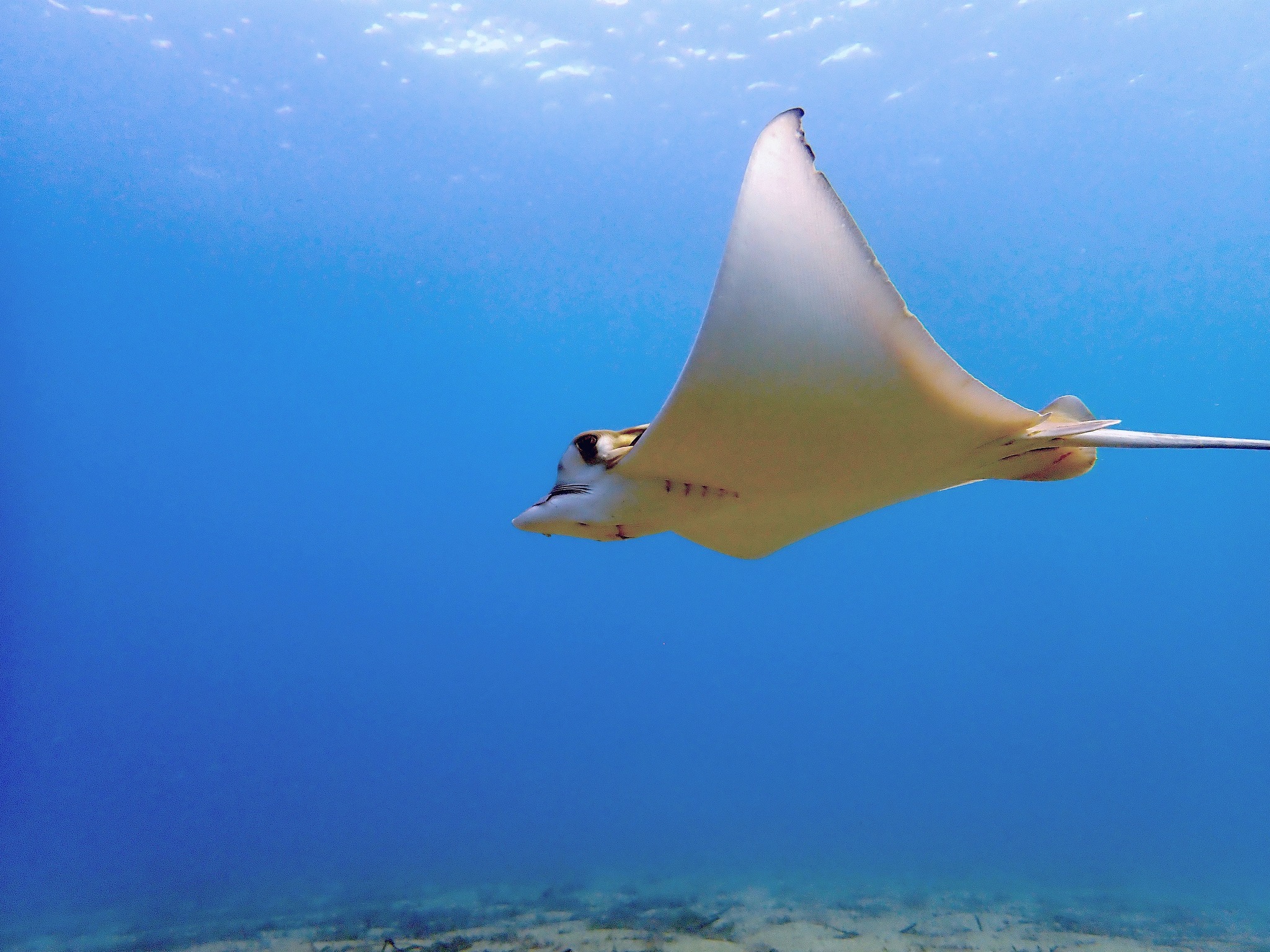
Recent studies have shown that Maltese coastal waters support juvenile bull rays and may serve as an important nursery area for young pups. Individuals recorded in Maltese waters typically have a wingspan of between 30 and 60 cm, classifying them as juveniles. Their presence suggests a healthy marine environment capable of supporting early life stages. The movements of bull rays beyond this juvenile phase remain unknown, as adult individuals have yet to be recorded in the area.
Encouragingly, conservation initiatives are beginning to emerge. Sharklab Malta has established an identification database of bull rays observed in Maltese coastal waters through regular snorkelling surveys. Photographs taken from above are used to identify individuals based on their unique dorsal patterns, with newly recorded rays assigned an identification code. Public participation plays a crucial role in this effort, and members of the public are encouraged to submit photographs of bull rays when sightings occur. Through continued research, citizen science, and increased awareness, there is growing hope that effective conservation measures can be developed to protect this species and ensure its survival in Maltese waters and beyond.
Threats
What can we do?
Threats
What can we do?
Threats
What can we do?
Experiences you may enjoy

Private Sunset experience
Feel the soul of the sea, enjoy the extaordinary colors and landscapes of Maltese Islands during the loveliest hours of the day.
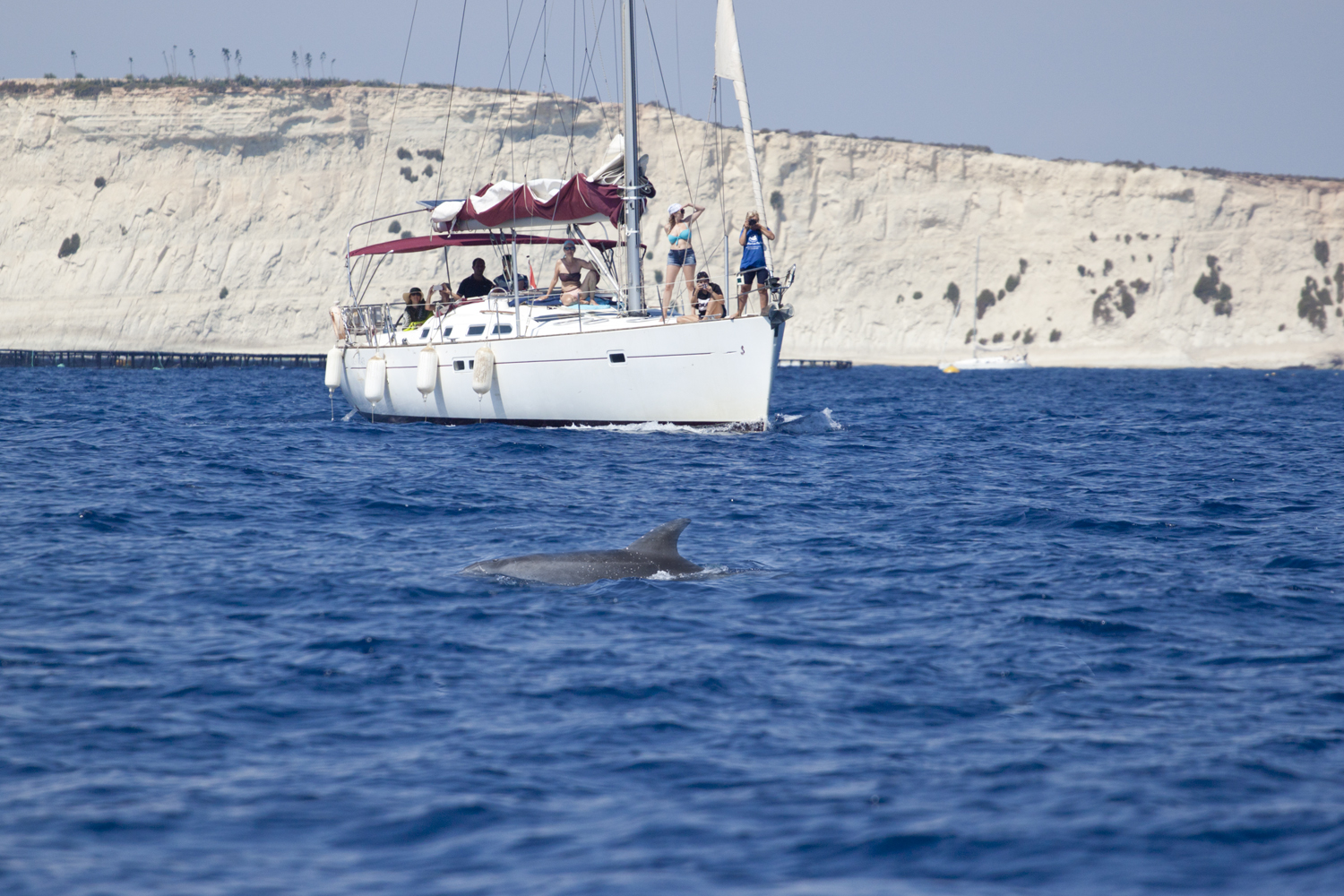
Private Marine life spotting
Enjoy a private marine life spotting experience with your loved ones. A day at sea to relax, reconnect, and discover Malta’s marine life.
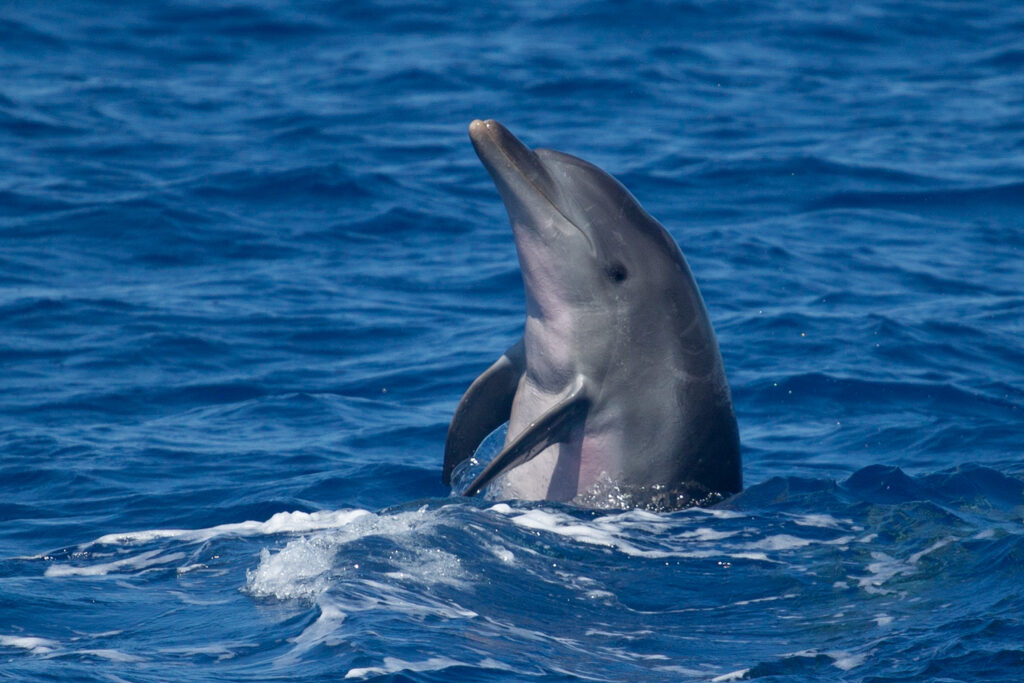
Shared Marine life spotting
Discover Malta’s marine environment on a shared boat tour with other guests. Enjoy a relaxing day at sea while spotting marine life along the way.