
Mediterranean damselfish
Scientific name: Chromis chromis
Suborder: Labroidei
Genus: Chromis
Family: Pomacentridae
Habitat: Coastal rocky reefs, caves, and seagrass meadows (Posidonia oceanica); typically from shallow waters down to about 50 m.
Maximum length in the Mediterranean: Usually around 10 – 12 cm
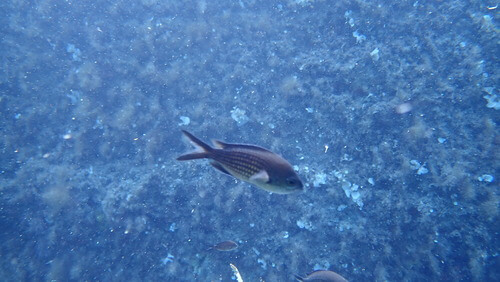
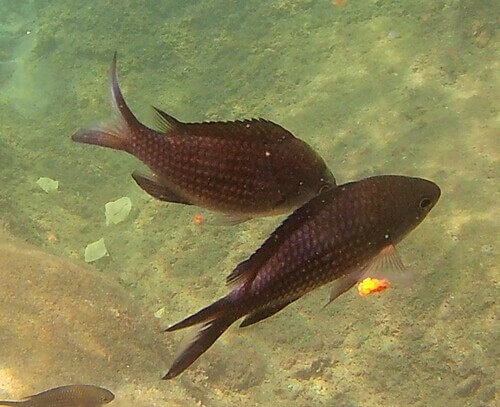
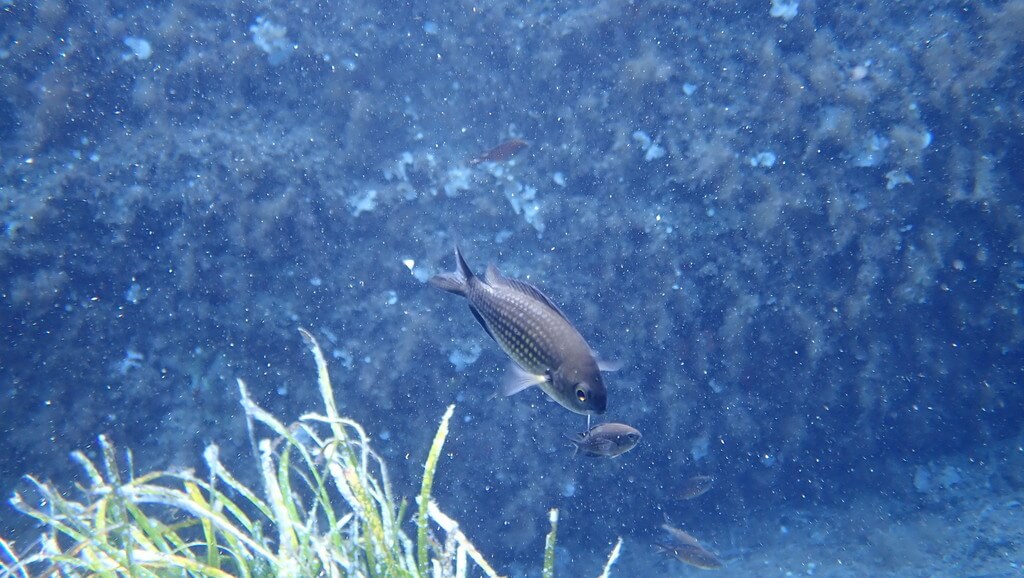
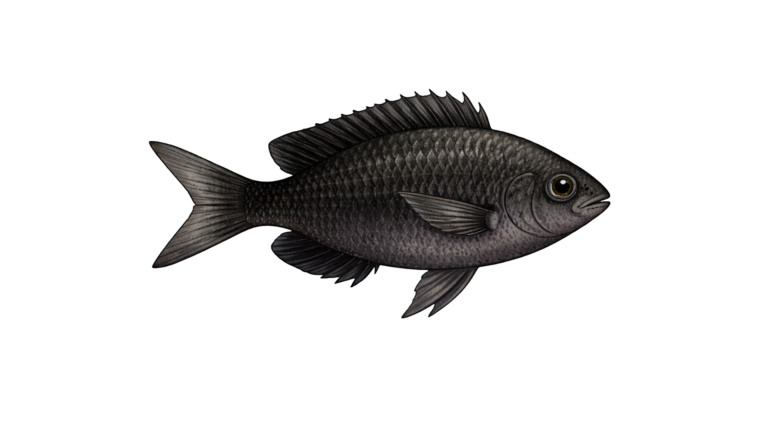
The Chromis chromis has an oval-shaped, moderately compressed body covered with large scales. It has a small head, relatively large eyes, and a highly protractile mouth adapted for feeding in the water column. This species is diurnal and gregarious, meaning that individuals tend to live and move in groups, often forming large shoals near rocky habitats. Adults are typically grey to black in colour, while juveniles are bright blue when small, measuring up to about 15 mm in length.
During the reproductive season, males prepare nests among rocky substrates and repeatedly dart toward schools of females to attract a mate. When a receptive female responds, the male guides her to the nest, where she lays her eggs and he fertilises them. The female remains with the eggs for a few days before leaving, while the male continues to guard and defend the nest until the eggs hatch.
Although the Mediterranean damselfish is currently considered relatively abundant, it faces several localised threats. Coastal habitat degradation caused by coastal development, anchoring, and intensive tourism can damage rocky reefs and seagrass habitats where the species lives and reproduces. Climate change and increasing sea temperatures may also affect its distribution and reproductive cycles. Additional pressures include pollution, particularly plastic debris and water contamination, as well as changes in plankton availability linked to ecosystem shifts in the Mediterranean Sea.
Threats
What can we do?
Threats
What can we do?
Experiences you may enjoy
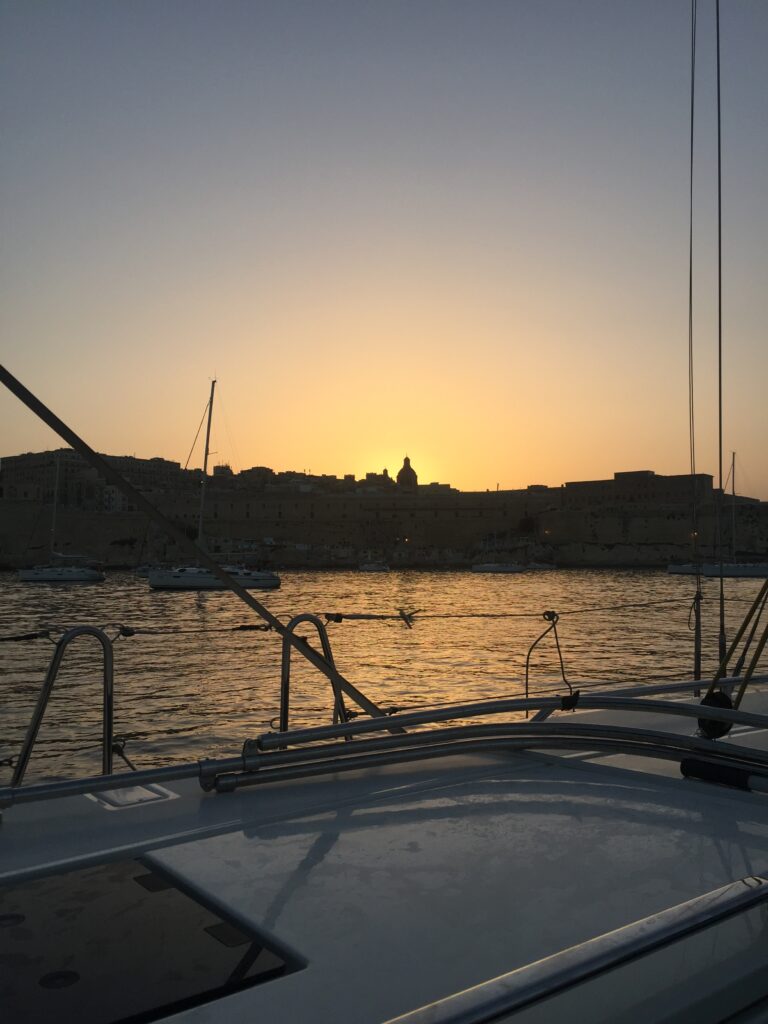
Private Sunset experience
Feel the soul of the sea, enjoy the extaordinary colors and landscapes of Maltese Islands during the loveliest hours of the day.
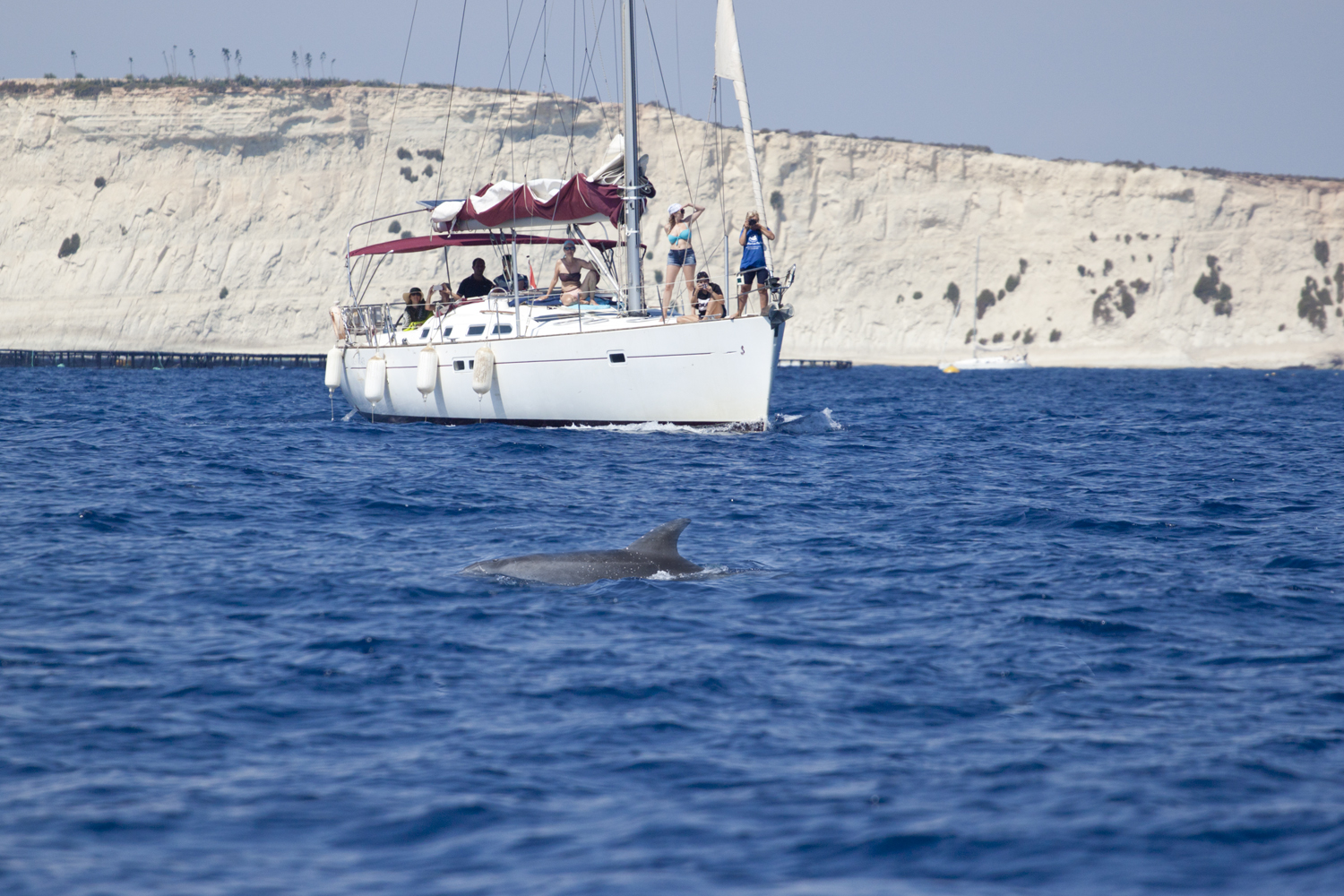
Private Marine life spotting
Enjoy a private marine life spotting experience with your loved ones. A day at sea to relax, reconnect, and discover Malta’s marine life.
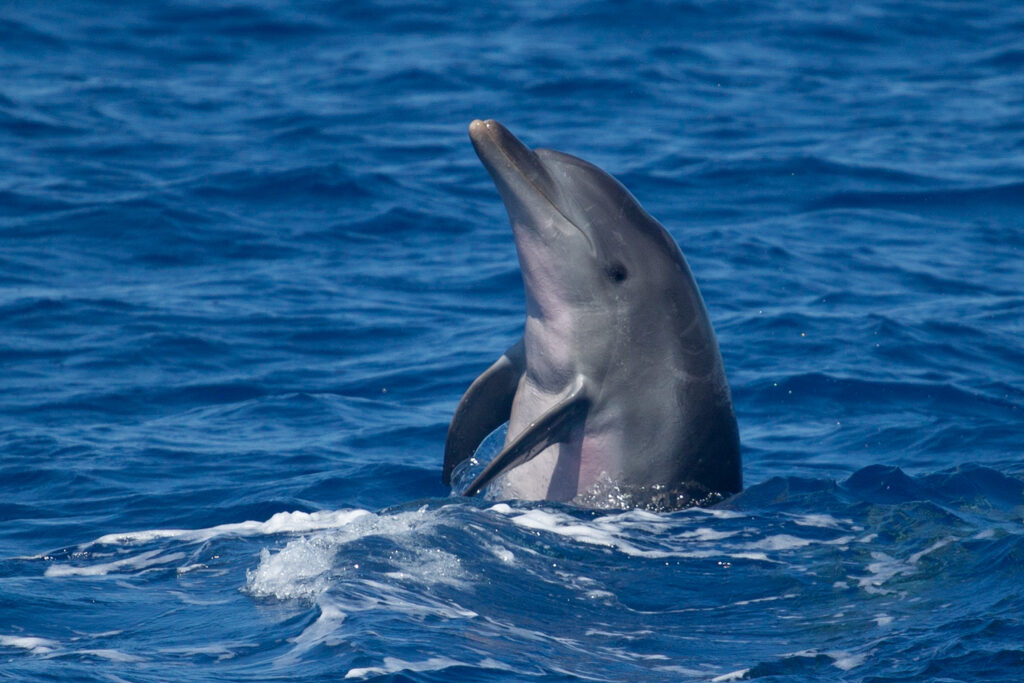
Shared Marine life spotting
Discover Malta’s marine environment on a shared boat tour with other guests. Enjoy a relaxing day at sea while spotting marine life along the way.