
Two-banded seabream
Scientific name: Diplodus vulgaris
Suborder: Percoidei
Genus: Diplodus
Family: Sparidae
Habitat: Coastal rocky bottoms, seagrass meadows (Posidonia oceanica), and sandy areas; typically from shallow waters down to about 50 even if it can be found down to 80-100m .
Minimum fishing size: 18 cm
Maximum length in the Mediterranean: Usually up to 35–40 cm even if the medius size is 25 cm.
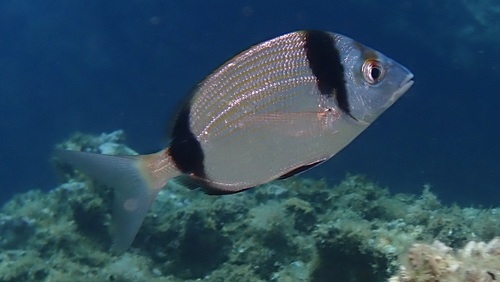
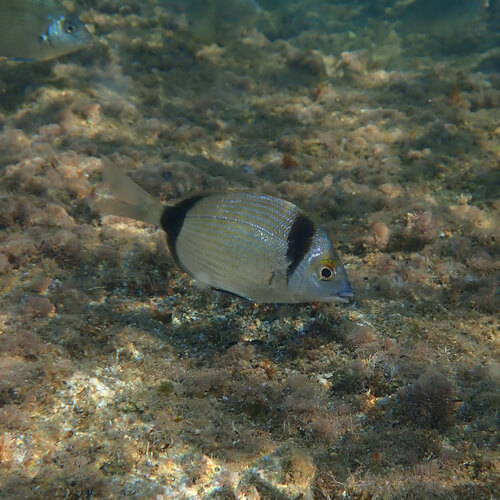
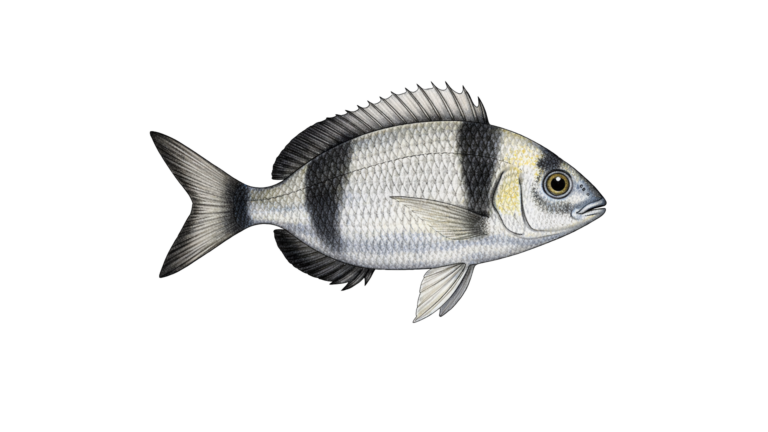
The Diplodus vulgaris is a coastal fish with an oval-shaped body that is relatively tall and laterally compressed. Its body is typically bright silver-grey in colour, often displaying subtle golden longitudinal lines that follow the rows of scales in fresh specimens. This species can be easily recognised by two distinct black bands: one located on the caudal peduncle (the narrow part of the body just before the tail) and another positioned behind the head, between the base of the dorsal fin and the base of the pectoral fin.
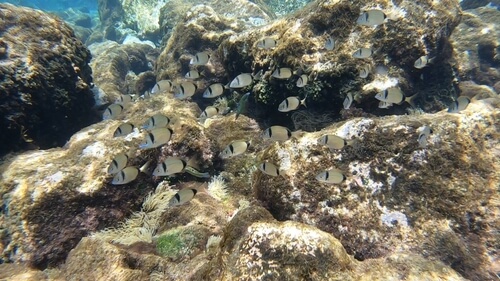
The two-banded seabream is a highly gregarious species, meaning that individuals commonly form groups or schools, particularly around rocky reefs, seagrass beds, and coastal habitats. Its relatively long fins are well suited to manoeuvring in rocky environments, where it searches for food among crevices and on the seabed. The species feeds on a variety of small benthic organisms, including crustaceans, molluscs, worms, and algae. Like many members of the seabream family, it is a hermaphroditic species, meaning individuals can change sex during their lifetime, which helps maintain balanced reproductive populations.
An interesting characteristic of this species lies in its name. The genus Diplodus comes from the Greek words diploos (double) and odous (tooth), referring to the distinctive double row of teeth found in these fishes. Their dentition is well developed and includes sharp incisors for grasping prey and molar-like teeth for crushing hard-shelled organisms.
The two-banded seabream faces several environmental pressures, particularly in coastal areas. One significant threat is heavy metal pollution associated with industrial activities, as elevated concentrations of metals such as lead and cadmium have been detected in the muscle tissue of this species. This contamination can pose risks not only to the fish itself but also to predators and humans that consume it. The species is also susceptible to various parasitic infections, as it can serve as a host for several parasites. Rising sea temperatures may further increase the prevalence and transmission of these parasites. Additional threats include habitat degradation caused by coastal development, over tourism and pollution, as well as fishing pressure in some regions.
Threats
What can we do?
Threats
What can we do?
Threats
What can we do?
Experiences you may enjoy
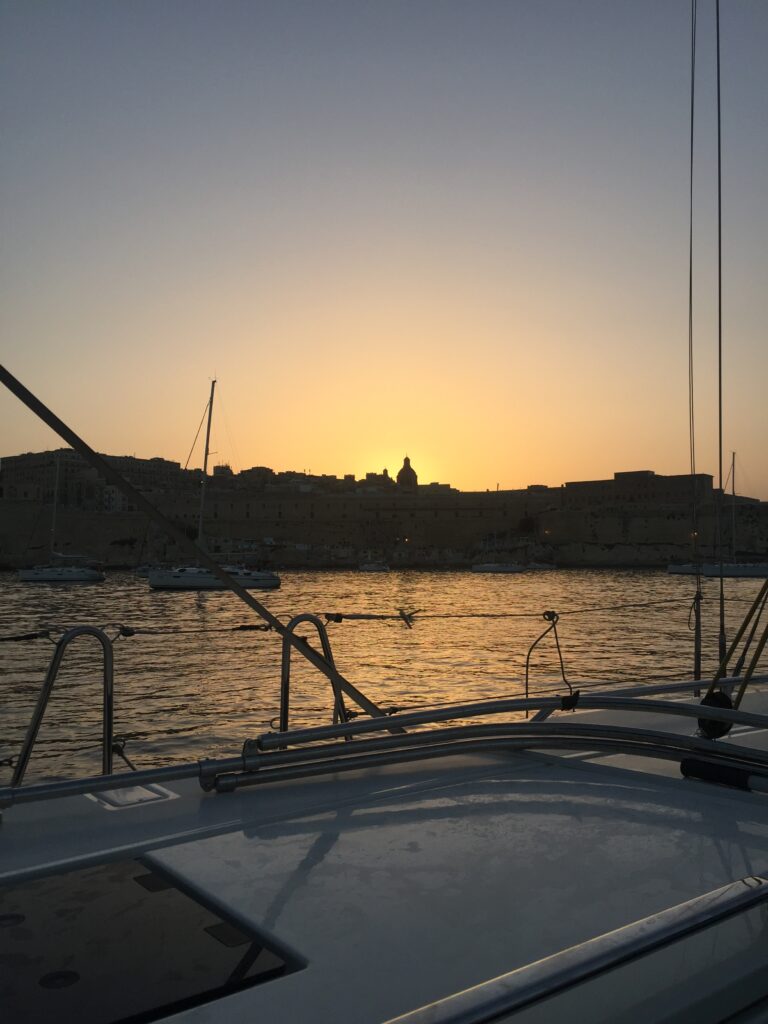
Private Sunset experience
Feel the soul of the sea, enjoy the extaordinary colors and landscapes of Maltese Islands during the loveliest hours of the day.
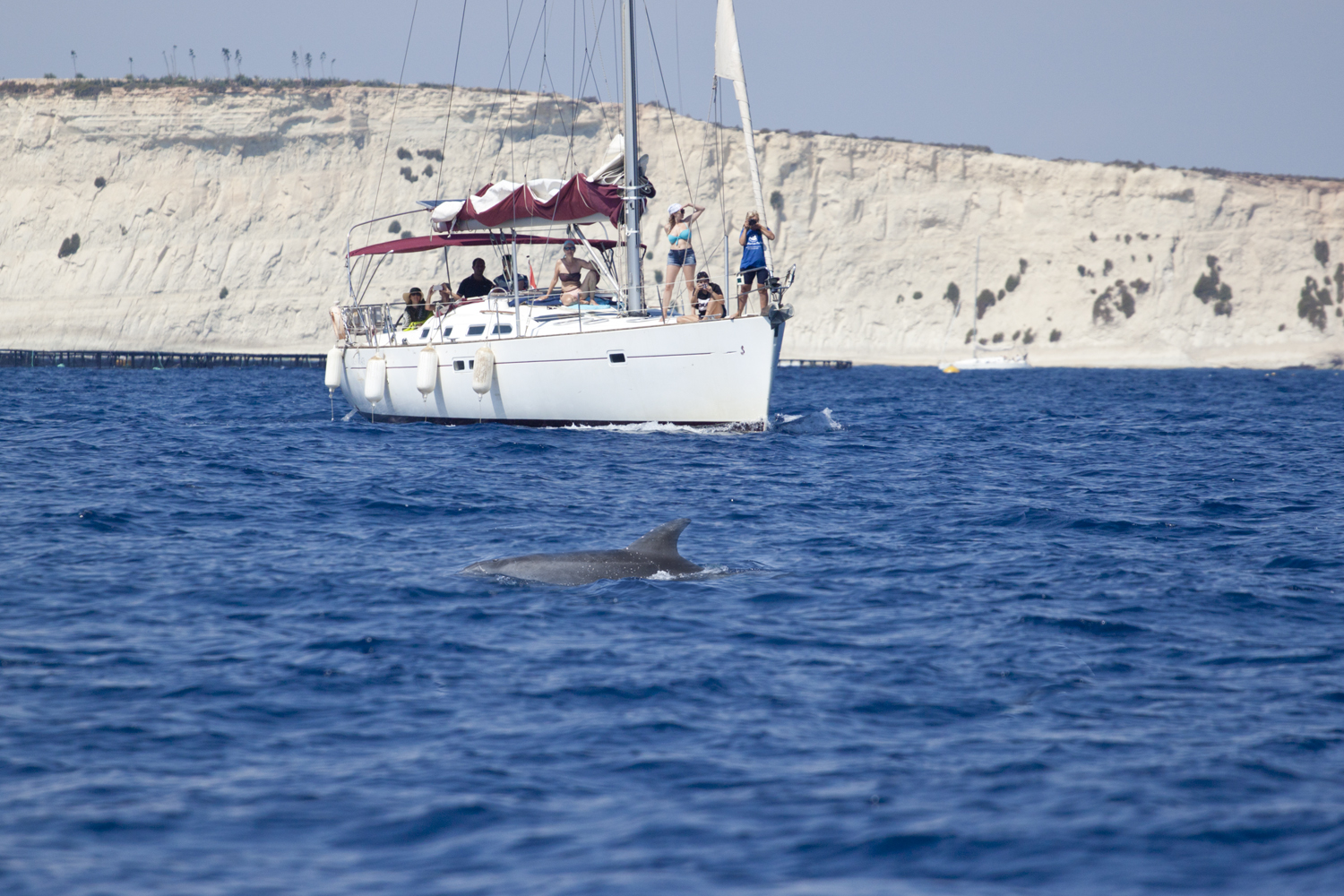
Private Marine life spotting
Enjoy a private marine life spotting experience with your loved ones. A day at sea to relax, reconnect, and discover Malta’s marine life.
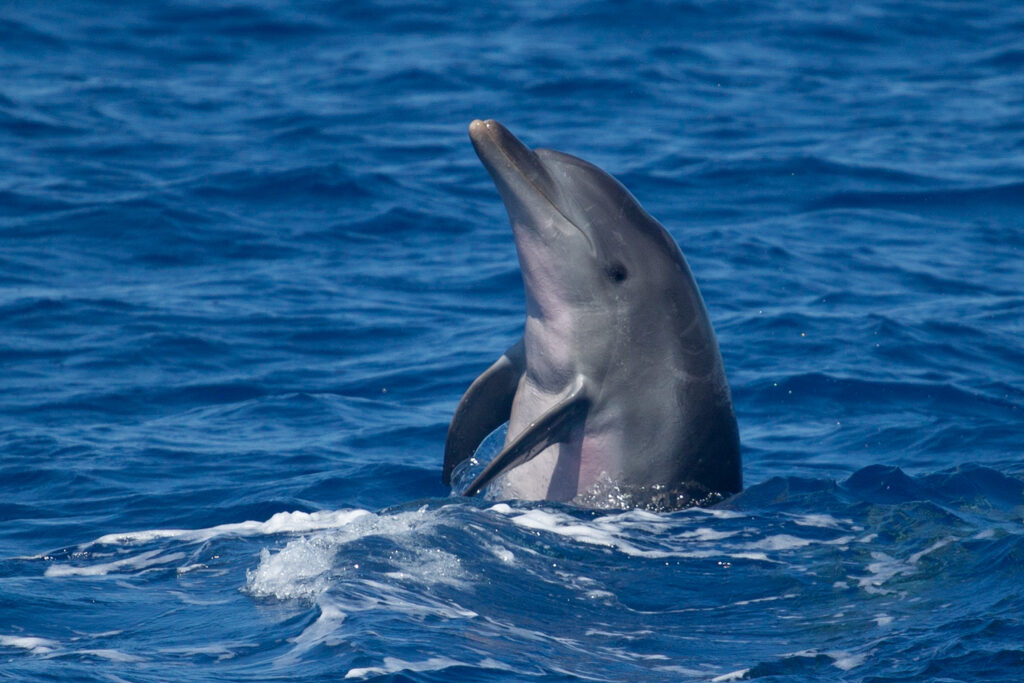
Shared Marine life spotting
Discover Malta’s marine environment on a shared boat tour with other guests. Enjoy a relaxing day at sea while spotting marine life along the way.