
Green turtle
Scientific name: Chelonia mydas
Suborder: Cryptodira
Genus: Chelonia
Family: Cheloniidae
Habitat: Coastal zones, open sea
Average weight: 180 kg
Max length: 1.20 m
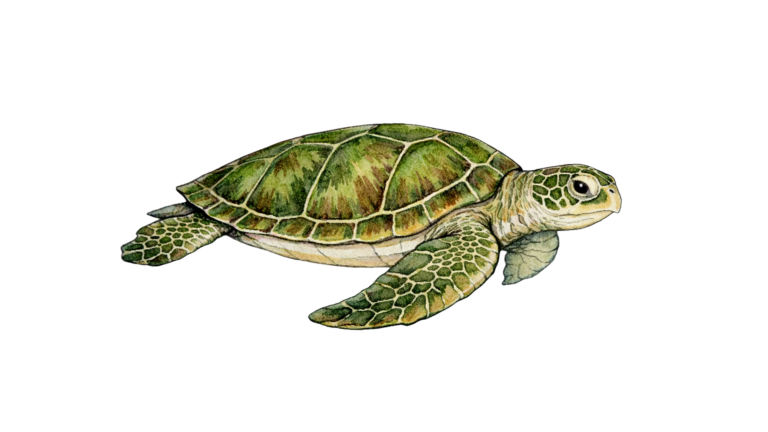
The Green turtle is the largest of all hard-shelled sea turtles, easily recognised by its comparatively small head and streamlined body. Its shell ranges in colour from dark brown and grey to olive, while its underside is a soft, pale yellow. Distinctive features include the serrated edges of its beak and two large scales positioned between the eyes. Unlike most other sea turtle species, green turtles are primarily herbivores, feeding mainly on seagrasses and algae. When the opportunity arises, they may also consume sponges, small invertebrates, or discarded fish.
Green turtles are found across the globe in subtropical and temperate waters, including the warmer eastern basin of the Mediterranean Sea. Like all sea turtles, they are remarkable navigators, capable of travelling thousands of kilometres across the ocean. These long-distance journeys are particularly important during the nesting season. Female green turtles reach sexual maturity between 25 and 35 years of age and return every two to five years to nest, often travelling back to the very beach or bay where they themselves hatched. Nesting occurs at night, when females crawl ashore to dig nests in the sand. Each nest can contain up to 110 eggs, and a female may lay a new clutch every two weeks over several months.
After incubating in the warm sand for around two months, the hatchlings emerge and instinctively scramble toward the sea. Guided by moonlight reflecting off the water, they move away from the dark silhouettes of dunes and vegetation and toward the brighter, open horizon of the ocean.
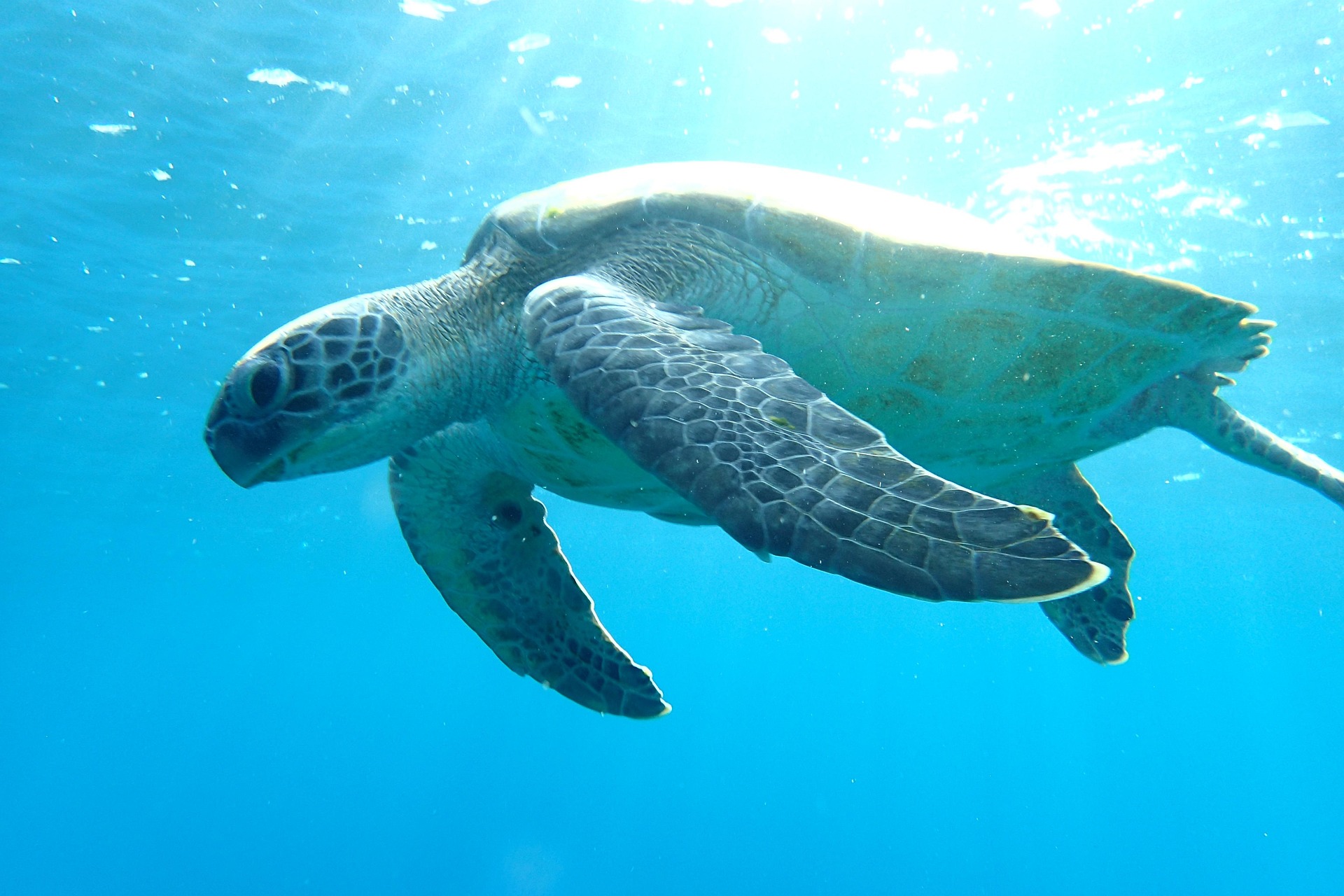
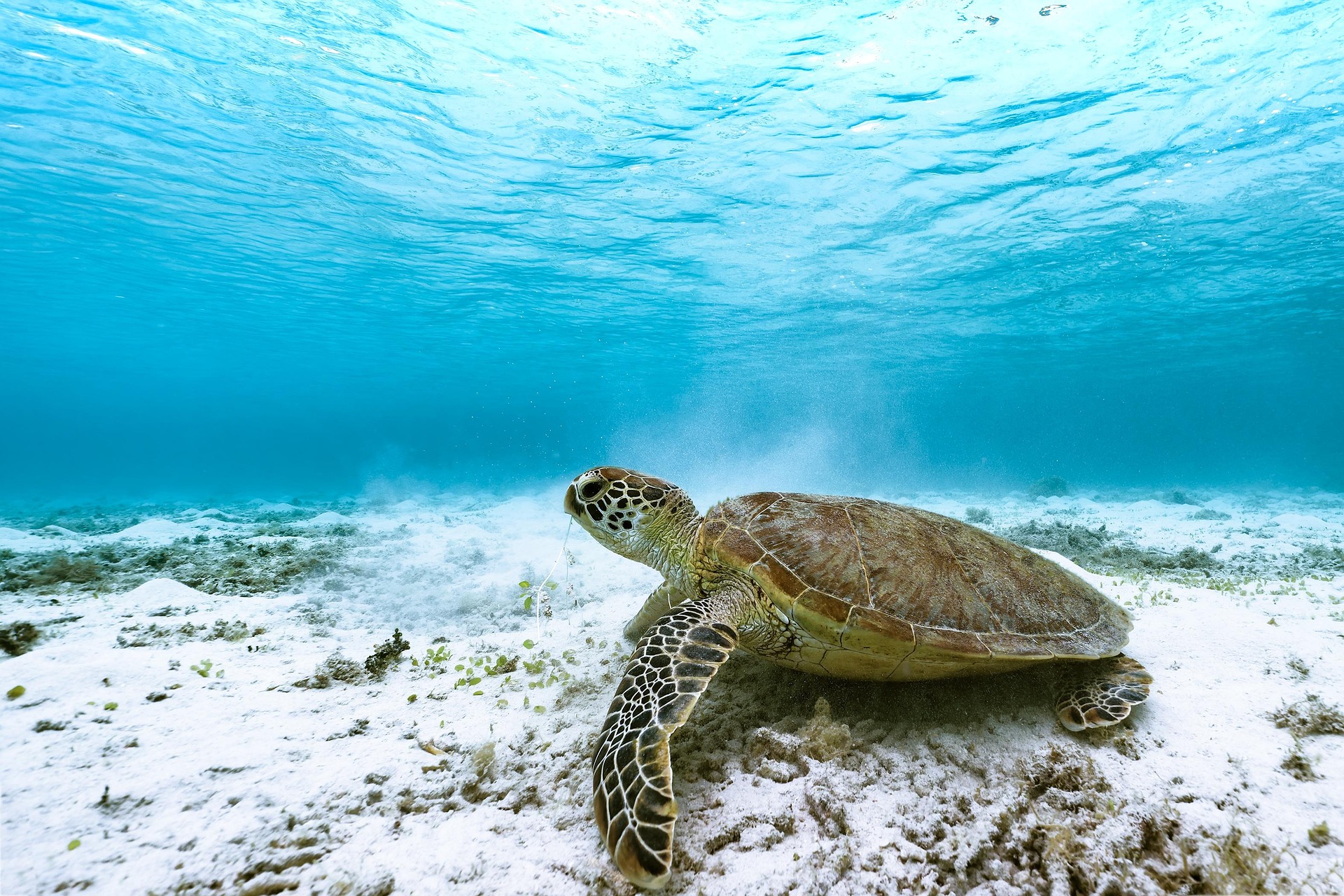
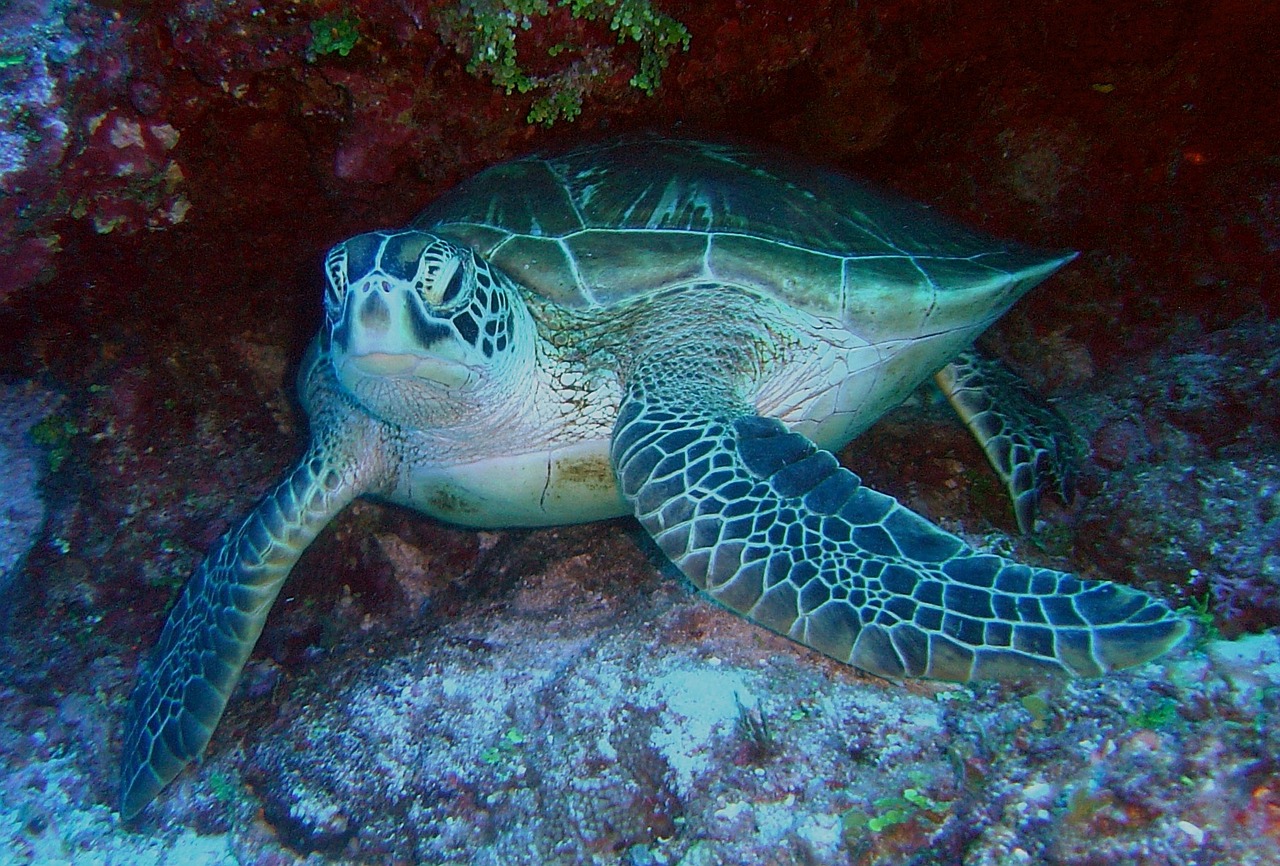
Green turtles can live for at least 70 years, spending most of their long lives roaming the open sea in relative solitude. Thanks to global conservation efforts in recent decades, many green turtle populations are showing signs of recovery. However, the species continues to face numerous threats. Due to the rising temperatures in the Mediterranean Sea, Green turtles have been spotted more frequently around the Maltese islands in recent years.
Threats
What can we do?
Threats
What can we do?
Threats
What can we do?
Experiences you may enjoy
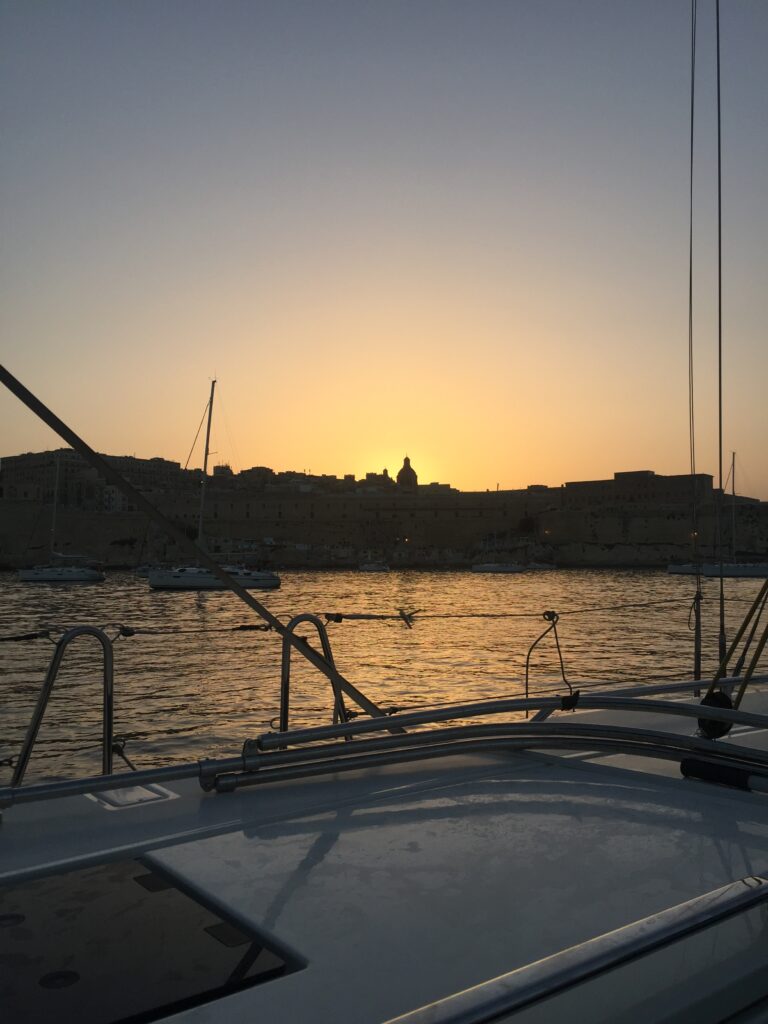
Private Sunset experience
Feel the soul of the sea, enjoy the extaordinary colors and landscapes of Maltese Islands during the loveliest hours of the day.
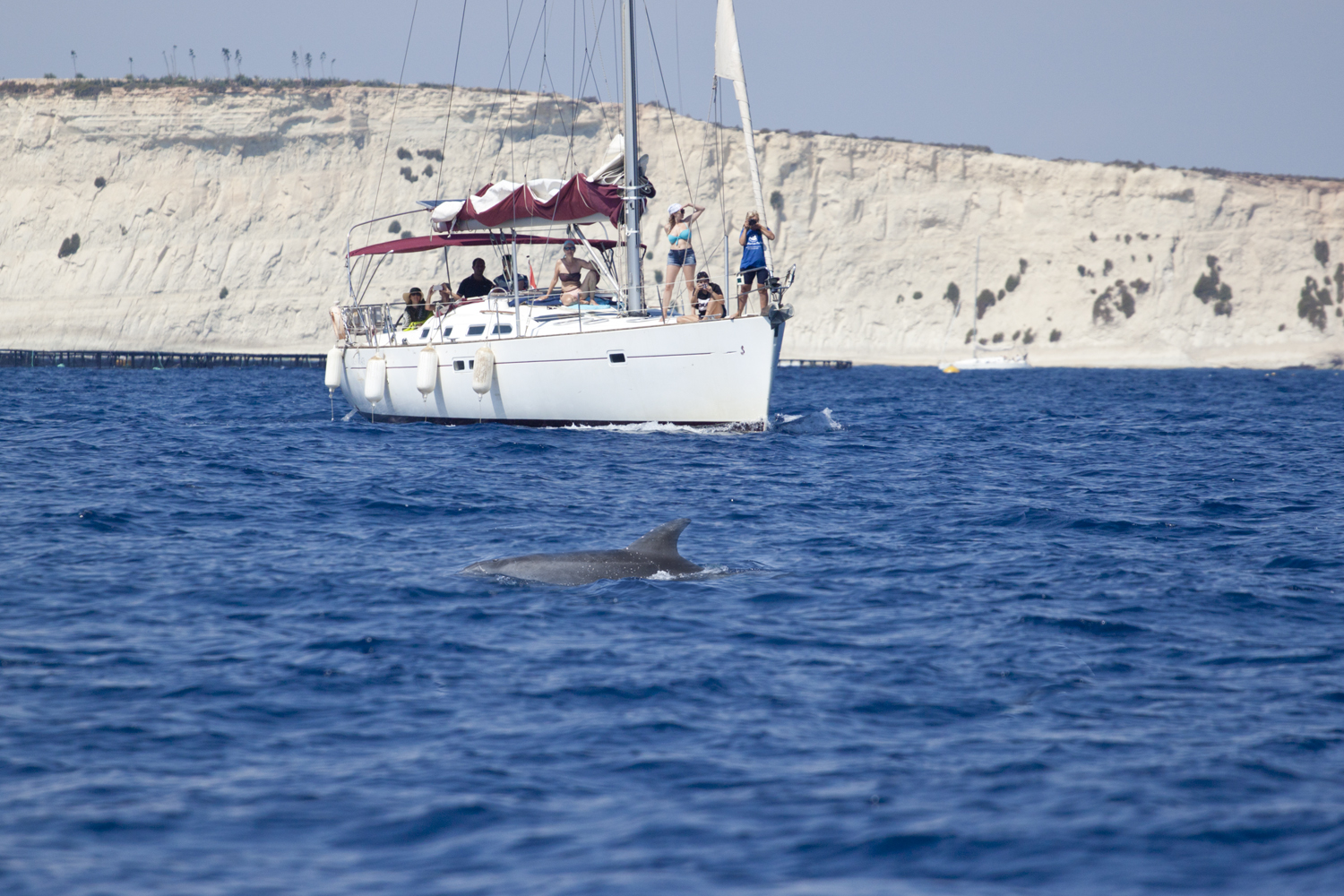
Private Marine life spotting
Enjoy a private marine life spotting experience with your loved ones. A day at sea to relax, reconnect, and discover Malta’s marine life.
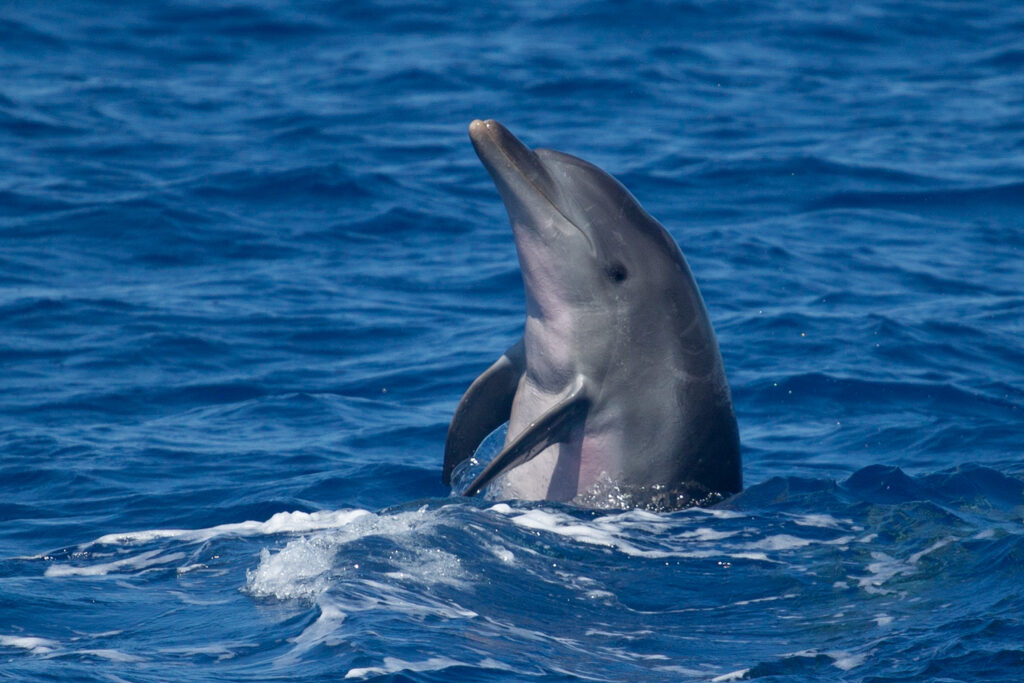
Shared Marine life spotting
Discover Malta’s marine environment on a shared boat tour with other guests. Enjoy a relaxing day at sea while spotting marine life along the way.