
Saddled seabream
Scientific name: Oblada melanura
Suborder: Percoidei
Genus: Oblada
Family: Sparidae
Habitat: Coastal rocky areas, seagrass meadows, and sandy bottoms; typically from shallow waters down to about 30–50 m, occasionally deeper.
Maximum length in the Mediterranean: Usually around 25–30 cm, maximum 38–40 cm.
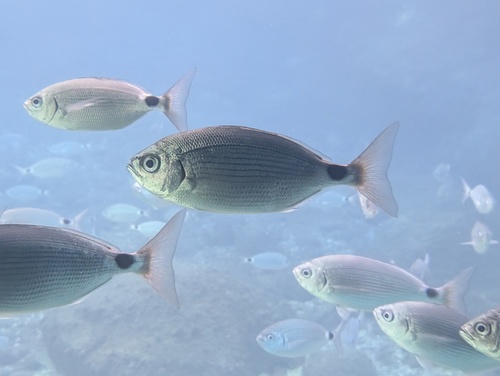
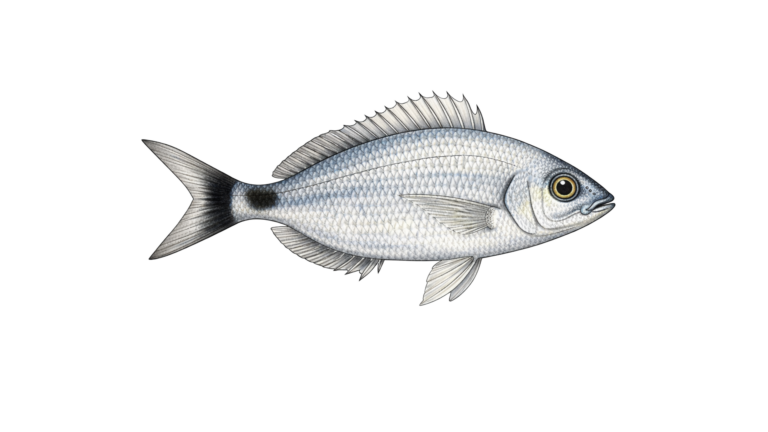
The saddled seabream is a member of the seabream family with a compressed, oval-shaped body that is well adapted for swimming in coastal waters. It is easily recognised by its silvery colouration, large eyes, and the distinctive black band at the base of the tail, which makes it particularly easy to identify while snorkelling or diving in shallow Mediterranean habitats.
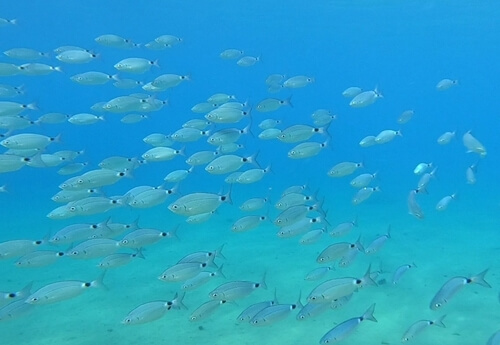
This species is highly gregarious, often forming large schools over rocky bottoms and Posidonia Oceanica seagrass meadows. It is an omnivorous feeder, consuming algae, small invertebrates, and organic detritus, and therefore occupies an intermediate position in the coastal food web. The saddled seabream is mainly diurnal, actively moving through shallow habitats during the day in search of food. It is generally considered a curious and tolerant species around divers, frequently allowing moderate approaches when movements are calm.
The species has a wide distribution throughout the Mediterranean Sea, extending into the eastern Atlantic, including the coasts of Portugal and archipelagos such as Madeira and the Canary Islands, and reaching as far as the Black Sea. It is also commonly observed along the coasts of Malta, where it forms part of the typical shallow coastal fish community.
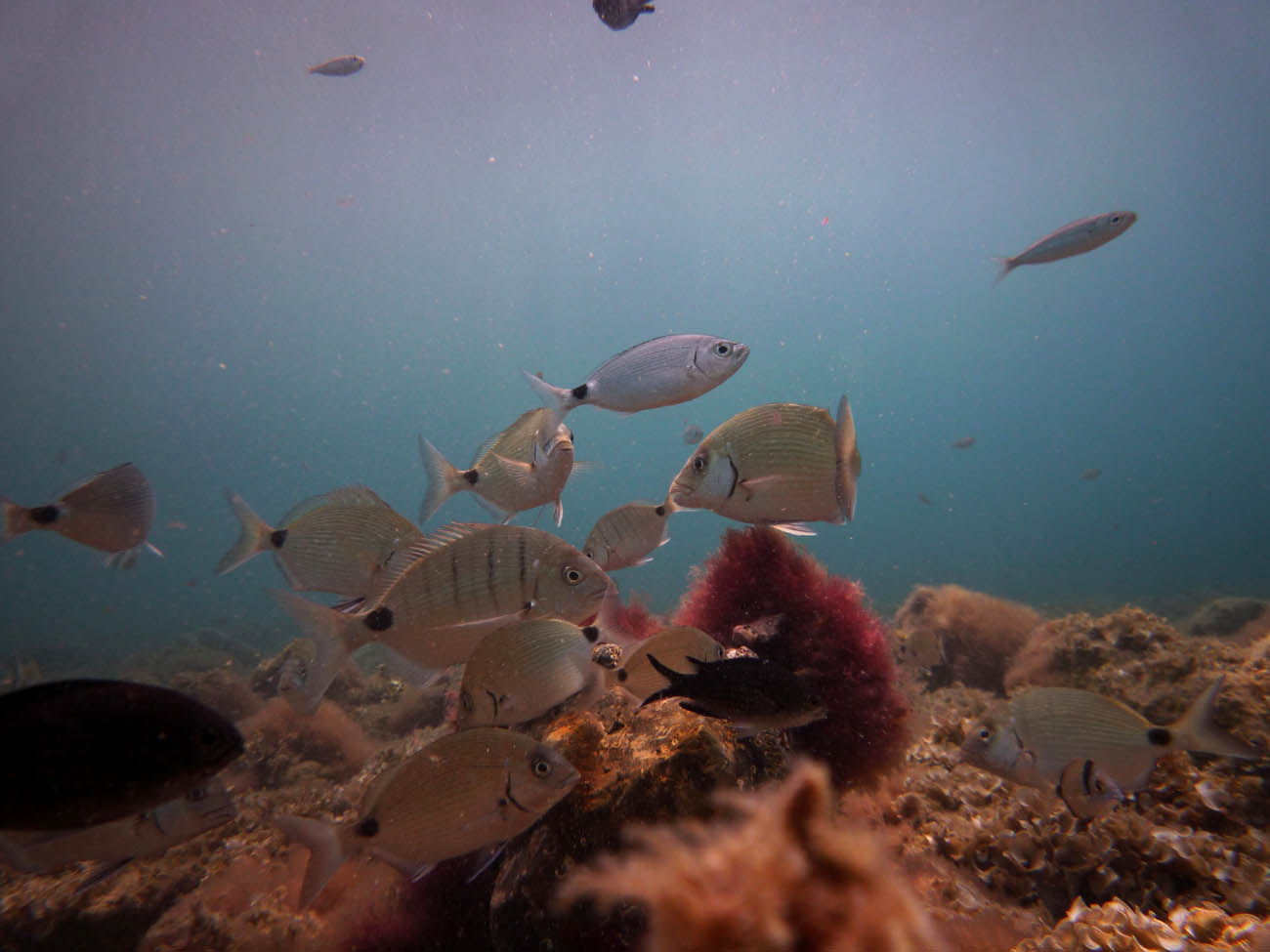
In Mediterranean coastal waters, the saddled seabream faces several pressures associated with human activities. It is frequently targeted by small-scale and recreational fisheries, particularly using nets, lines, and traps. Habitat degradation caused by coastal development, anchoring, and pollution can also affect the rocky reefs and seagrass meadows where this species feeds and shelters. Additionally, plastic pollution and chemical contaminants present in nearshore environments may impact individuals through ingestion or accumulation in the food chain. Increasing coastal tourism, boating, and diving activity may disturb schooling behaviour in shallow habitats. Climate change, including rising sea temperatures and ecosystem shifts, may further influence the availability of food resources and the distribution of coastal fish communities.
Interesting fact: The dark marking near the tail functions as a “false eye” (ocellus). This form of camouflage can confuse predators, making it difficult for them to determine the fish’s real head position and predict the direction in which it will escape during an attack.
Threats
What can we do?
Threats
What can we do?
Threats
What can we do?
Experiences you may enjoy
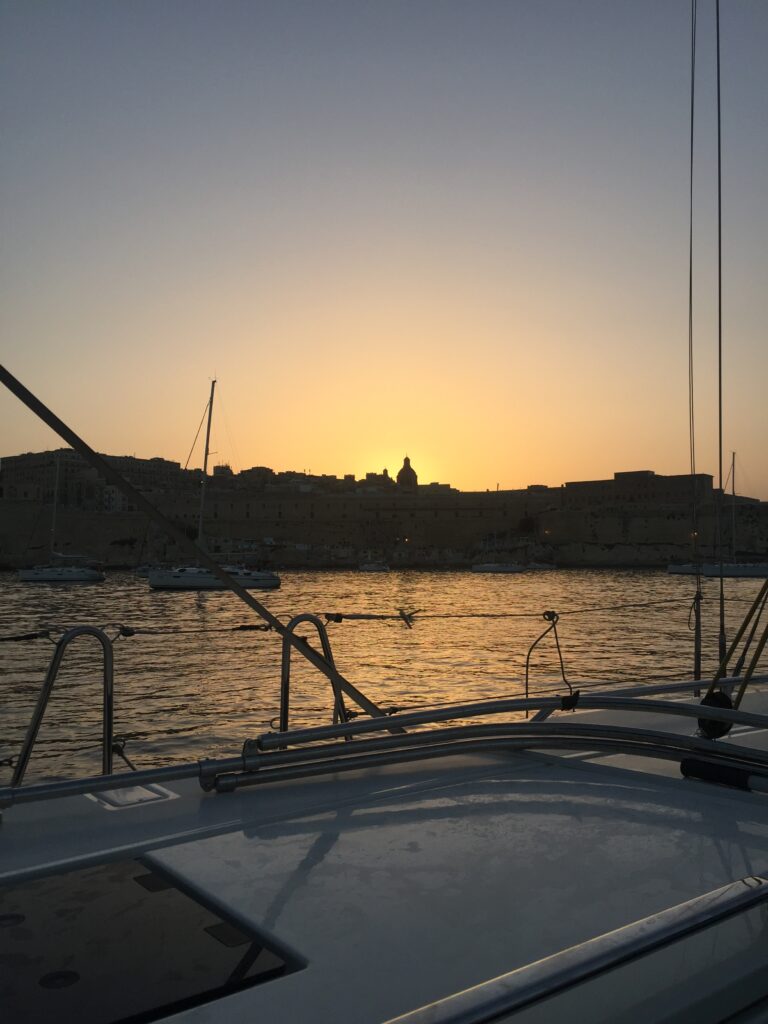
Private Sunset experience
Feel the soul of the sea, enjoy the extaordinary colors and landscapes of Maltese Islands during the loveliest hours of the day.
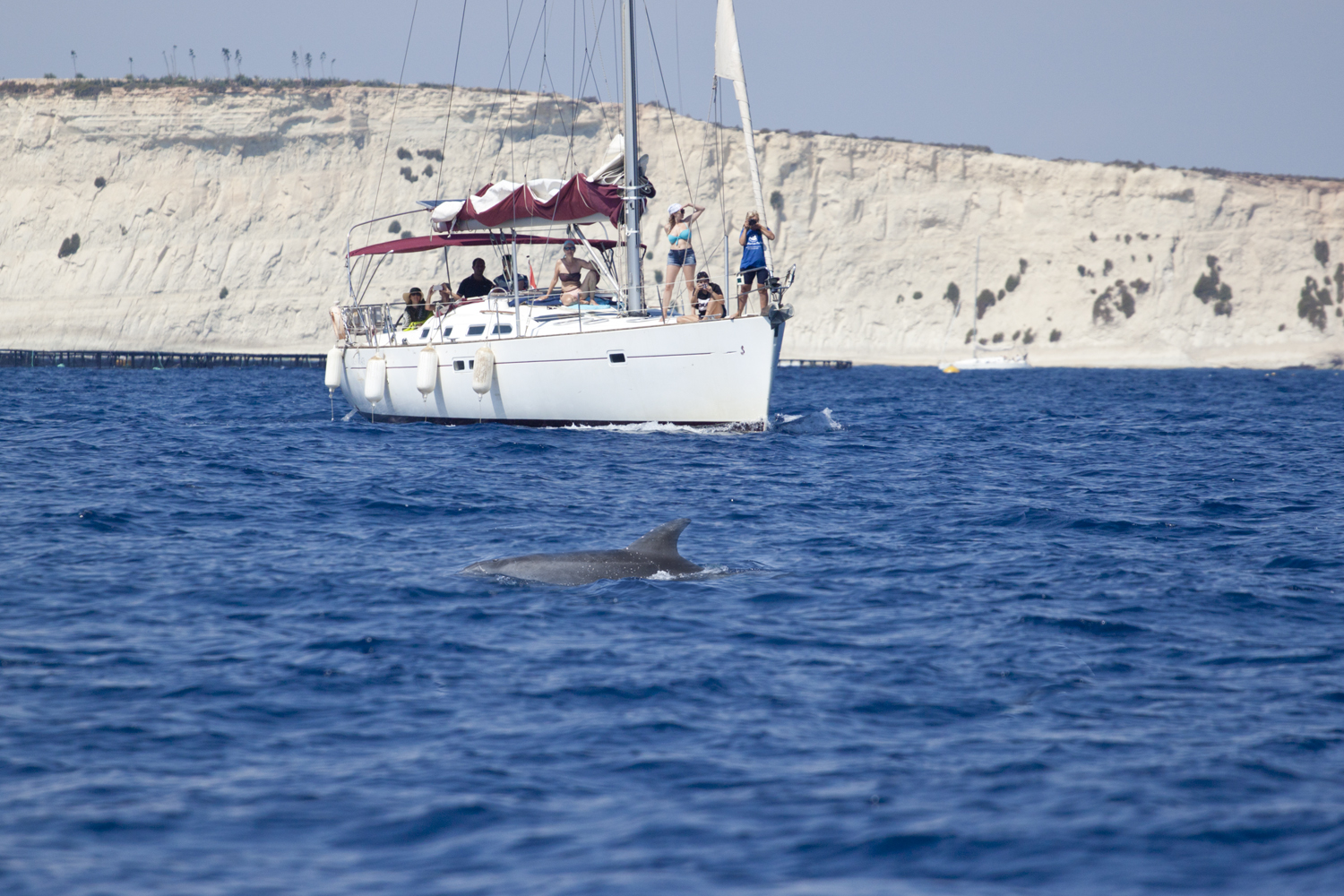
Private Marine life spotting
Enjoy a private marine life spotting experience with your loved ones. A day at sea to relax, reconnect, and discover Malta’s marine life.
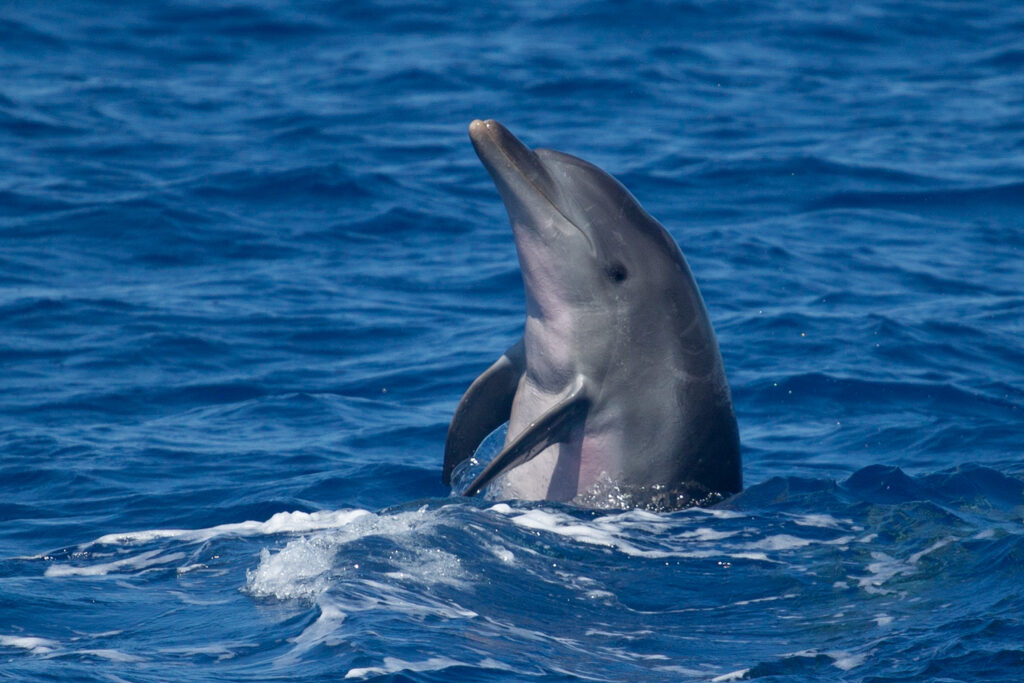
Shared Marine life spotting
Discover Malta’s marine environment on a shared boat tour with other guests. Enjoy a relaxing day at sea while spotting marine life along the way.