
European barracuda
Scientific name: Sphyraena sphyyraena
Suborder: Sphyraenoidei
Genus: Sphyraena
Family: Sphyraenidae
Habitat: Coastal and offshore waters, rocky reefs, seagrass meadows (Posidonia Oceanica), and open waters; usually from shallow waters down to ~100 m.
Maximum length in the Mediterranean: Commonly up to 30-60 cm, with maximum recorded lengths around 100 cm.
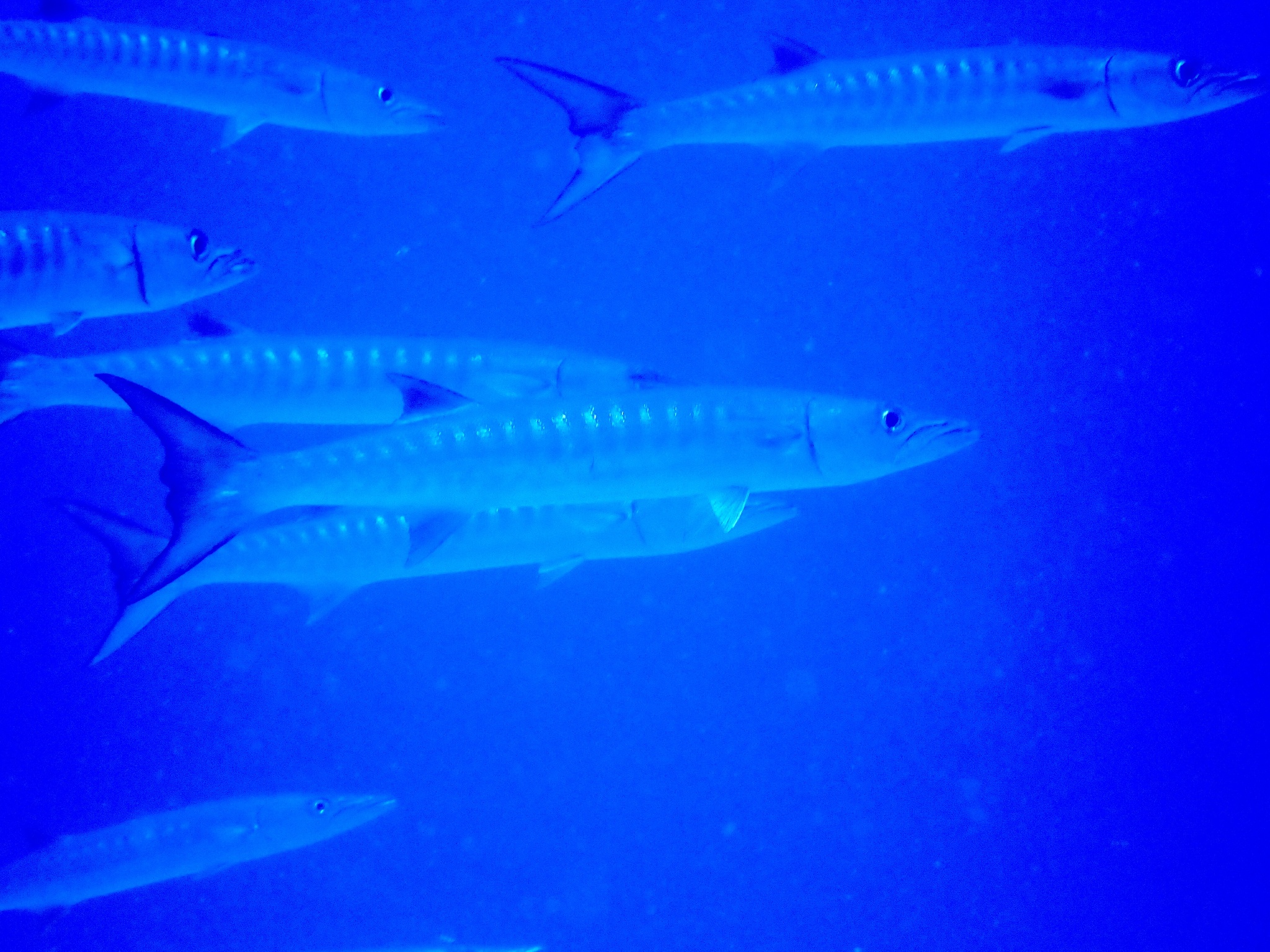
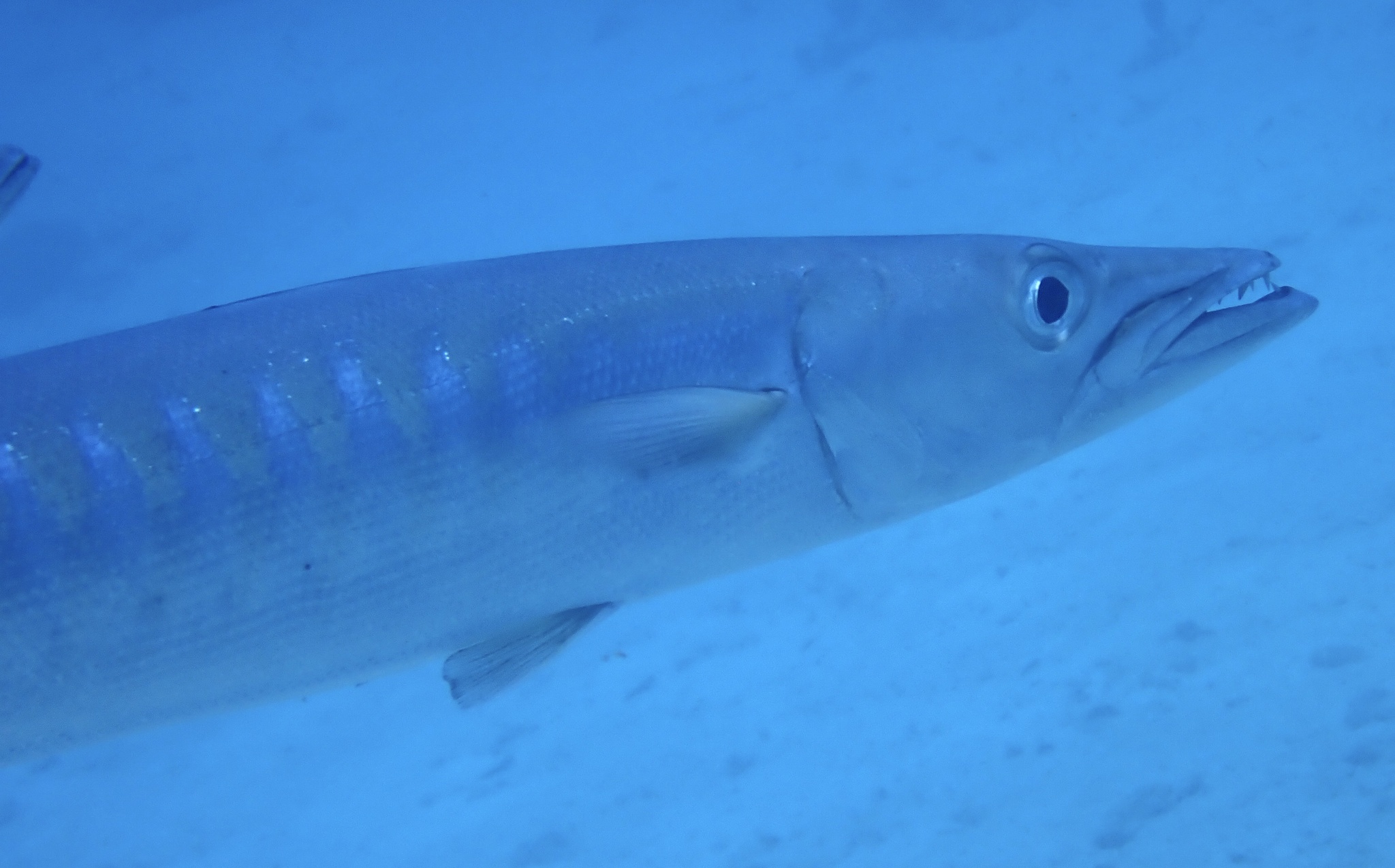
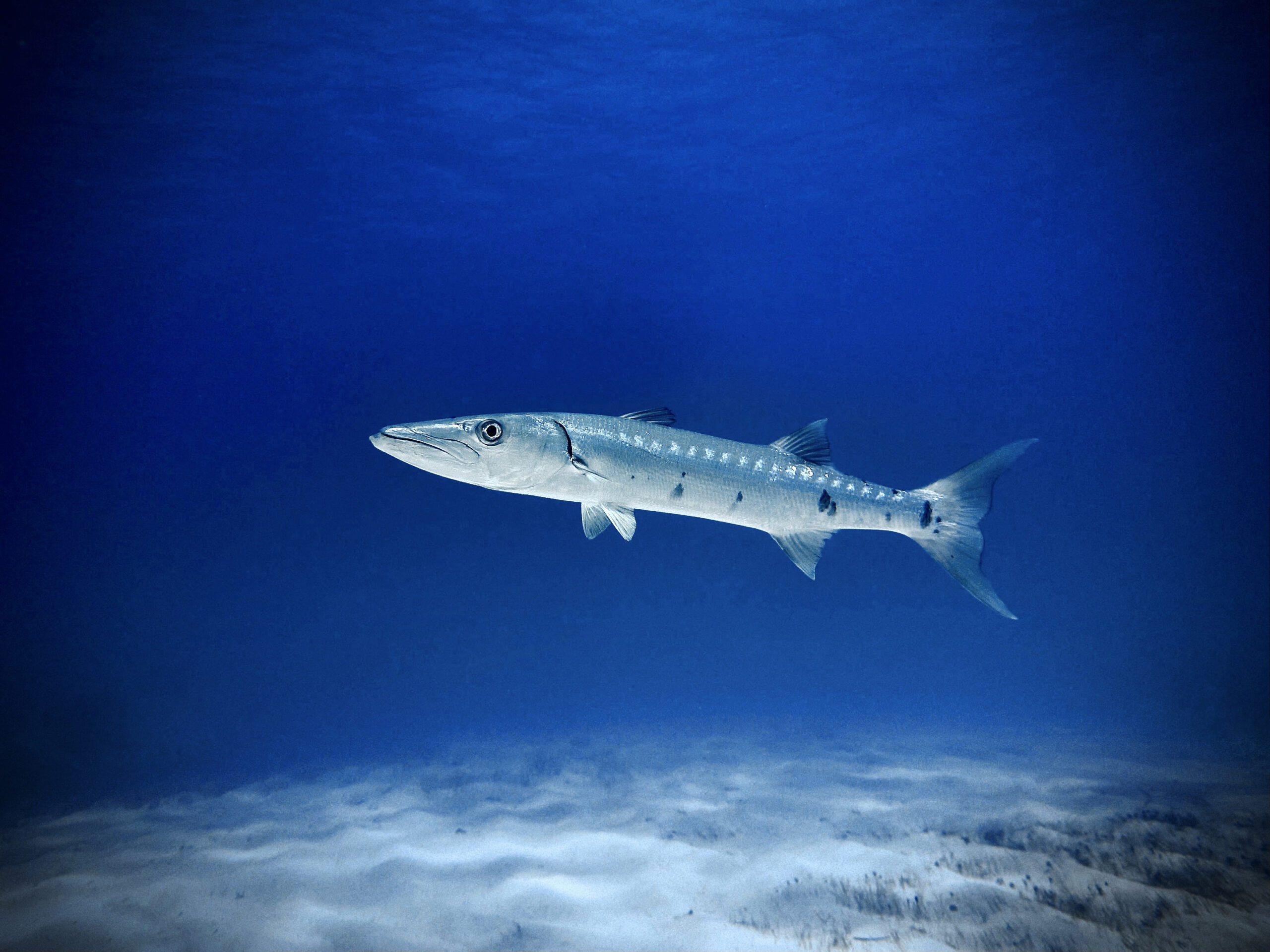
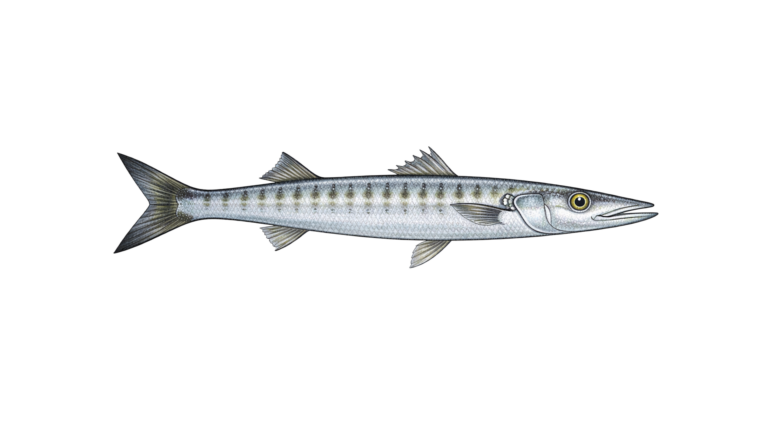
The European barracuda is silver-grey in colour, marked by a distinctive golden longitudinal stripe along its elongated, streamlined body—perfectly designed for fast swimming. Its large mouth houses well-developed conical teeth, although it poses no significant threat to humans.
In the Mediterranean Sea, these barracudas often form large shoals, particularly among juveniles and subadults. The species is also well-documented in classical Mediterranean texts, reflecting its long history in local fishing traditions. Although it has been harvested by small-scale fisheries since ancient times, it is not a major commercial species today. The flesh is lean, white, and firm, prized for its quality despite limited commercial targeting.
An interesting behavioural trait is its interaction with divers: the Mediterranean barracuda is sometimes considered a “photogenic” fish. Divers report that the fish may follow them closely during dives, and at night, it can appear to pause motionless in front of a torch light for several seconds—a brief but fascinating response to light stimuli.
In Mediterranean coastal areas, the European barracuda faces multiple threats largely linked to human activity. It is frequently caught as bycatch in artisanal and small-scale fisheries, and in some regions, juveniles are directly harvested, reducing population recruitment. Habitat degradation from coastal development, pollution, and seafloor disturbances further diminishes the shallow habitats where juveniles and shoals thrive. The species is also vulnerable to plastic pollution, which can accumulate through their prey, and to the broader impacts of climate change, including rising sea temperatures and shifts in prey availability. Additionally, intense boat traffic and recreational activities in coastal zones can stress or displace barracuda shoals, altering their natural behaviour and feeding patterns. While not currently endangered, these pressures make coastal populations particularly sensitive to human influence.
Threats
What can we do?
Threats
What can we do?
Threats
What can we do?
Experiences you may enjoy
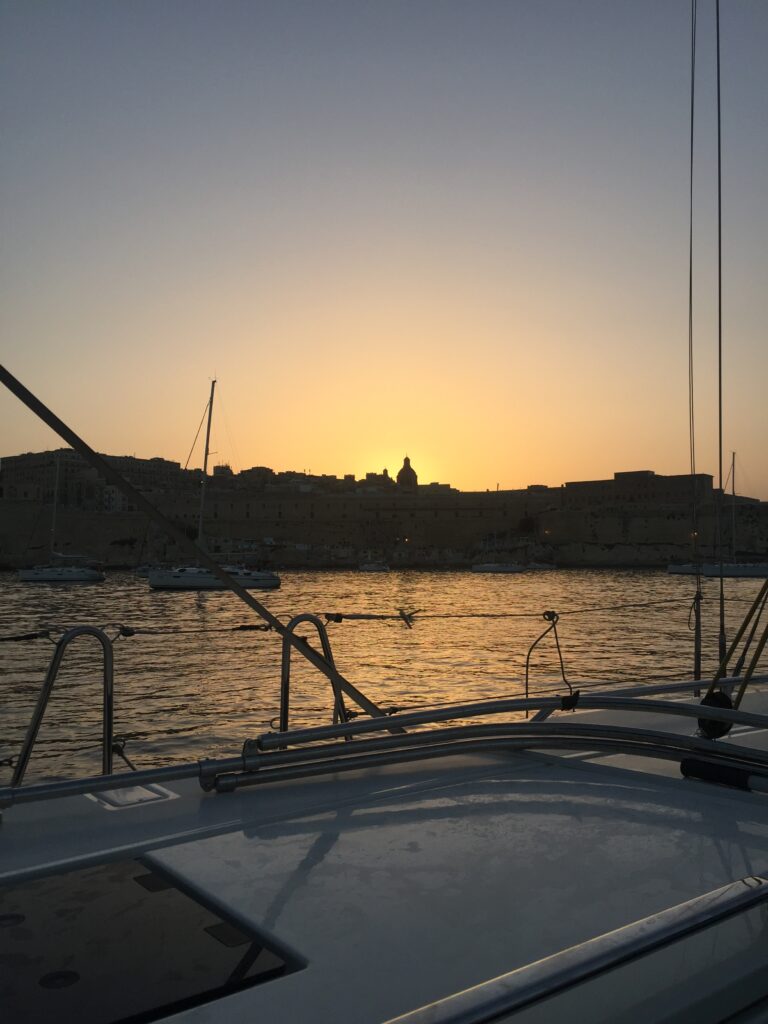
Private Sunset experience
Feel the soul of the sea, enjoy the extaordinary colors and landscapes of Maltese Islands during the loveliest hours of the day.
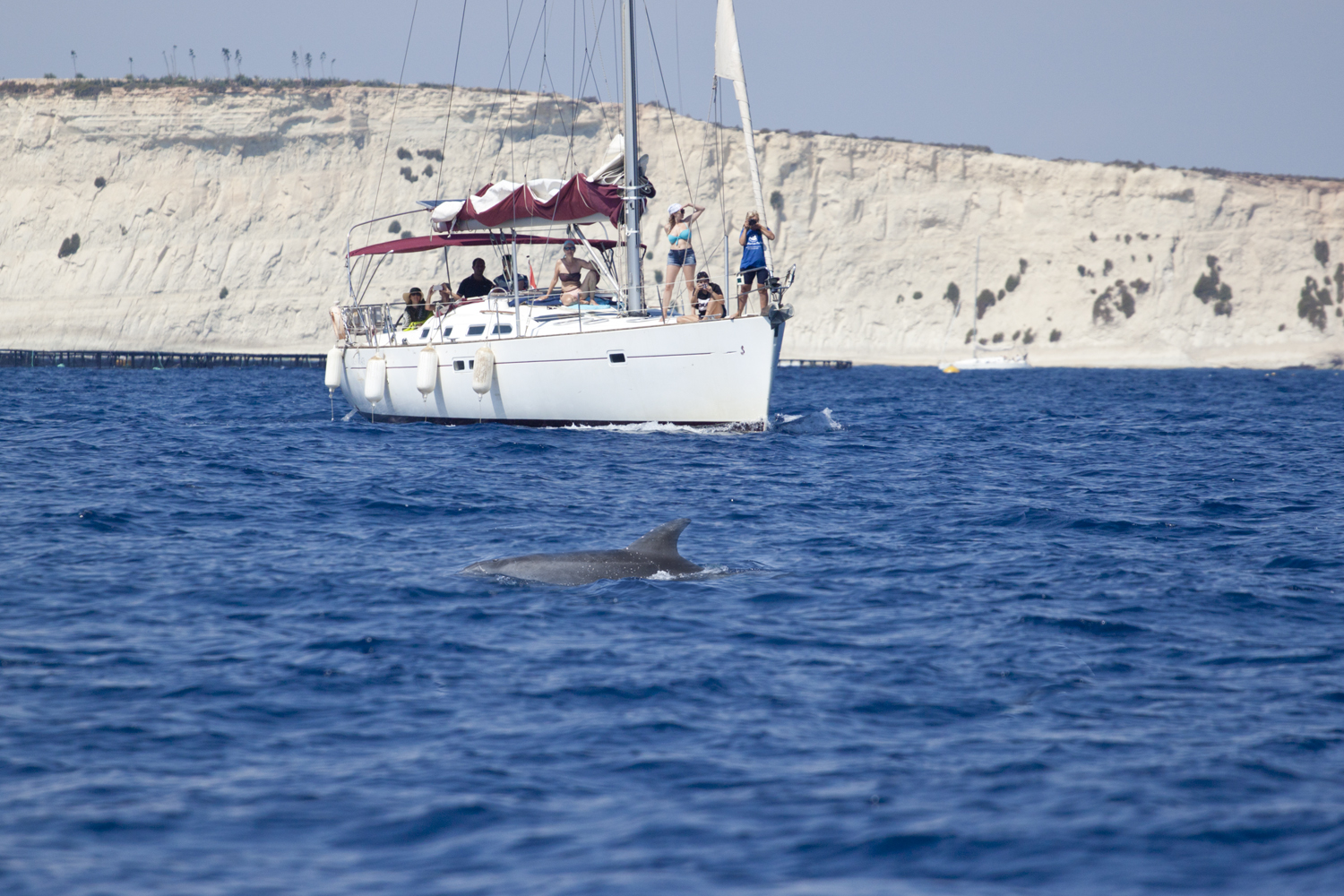
Private Marine life spotting
Enjoy a private marine life spotting experience with your loved ones. A day at sea to relax, reconnect, and discover Malta’s marine life.
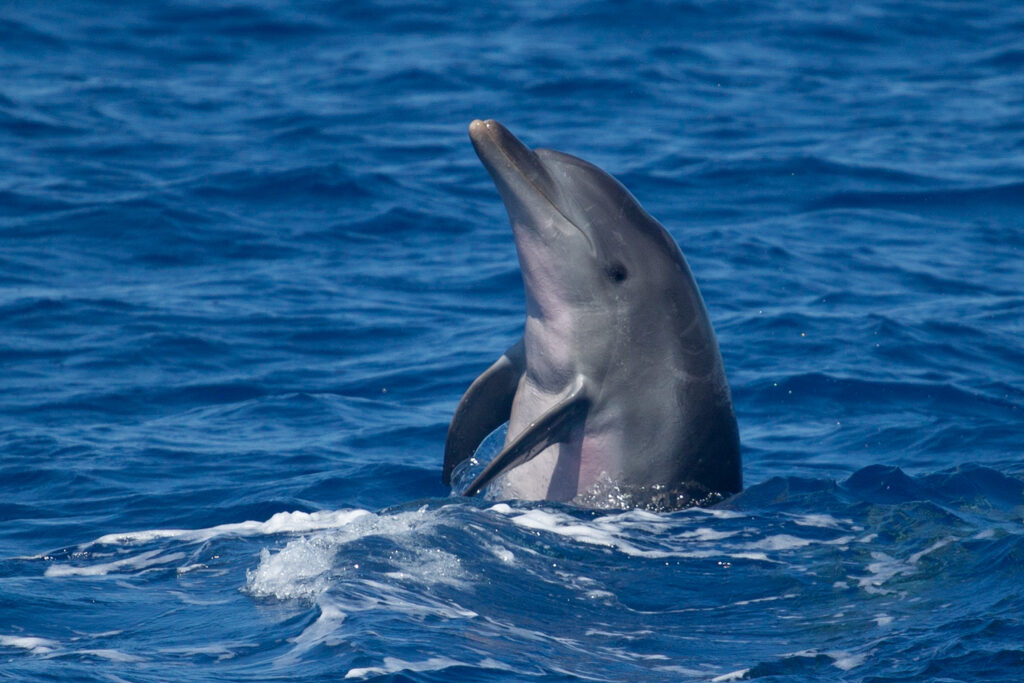
Shared Marine life spotting
Discover Malta’s marine environment on a shared boat tour with other guests. Enjoy a relaxing day at sea while spotting marine life along the way.