Keep in mind
Keep your belongings secure and carry a small first aid kit. Always bring enough drinking water and be mindful of the sun, especially during summer, as there is little to no shade along the walks.
Check the weather before starting your walk. Choose a walk that suits your ability and stop if it becomes too challenging.
Route description
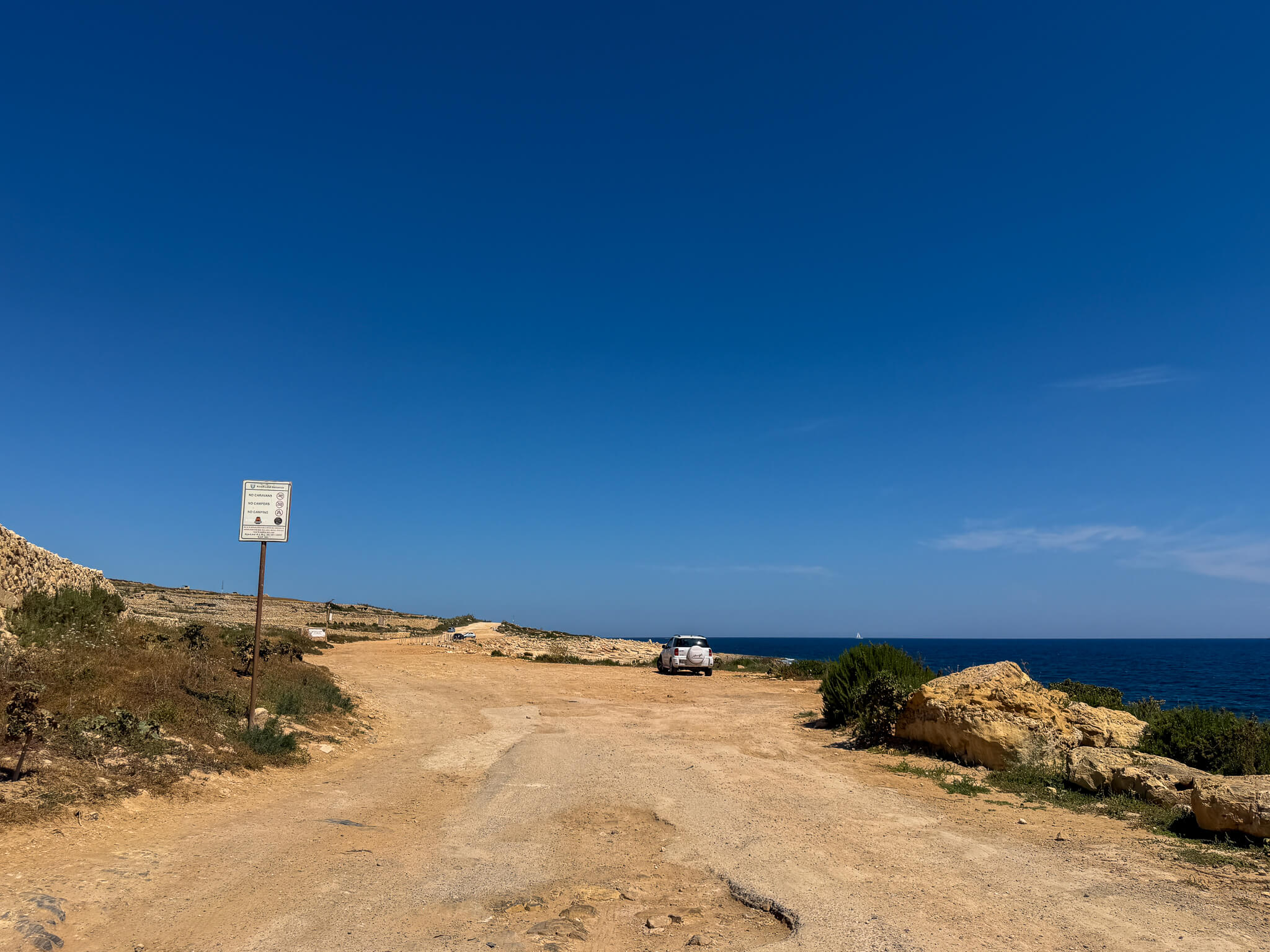
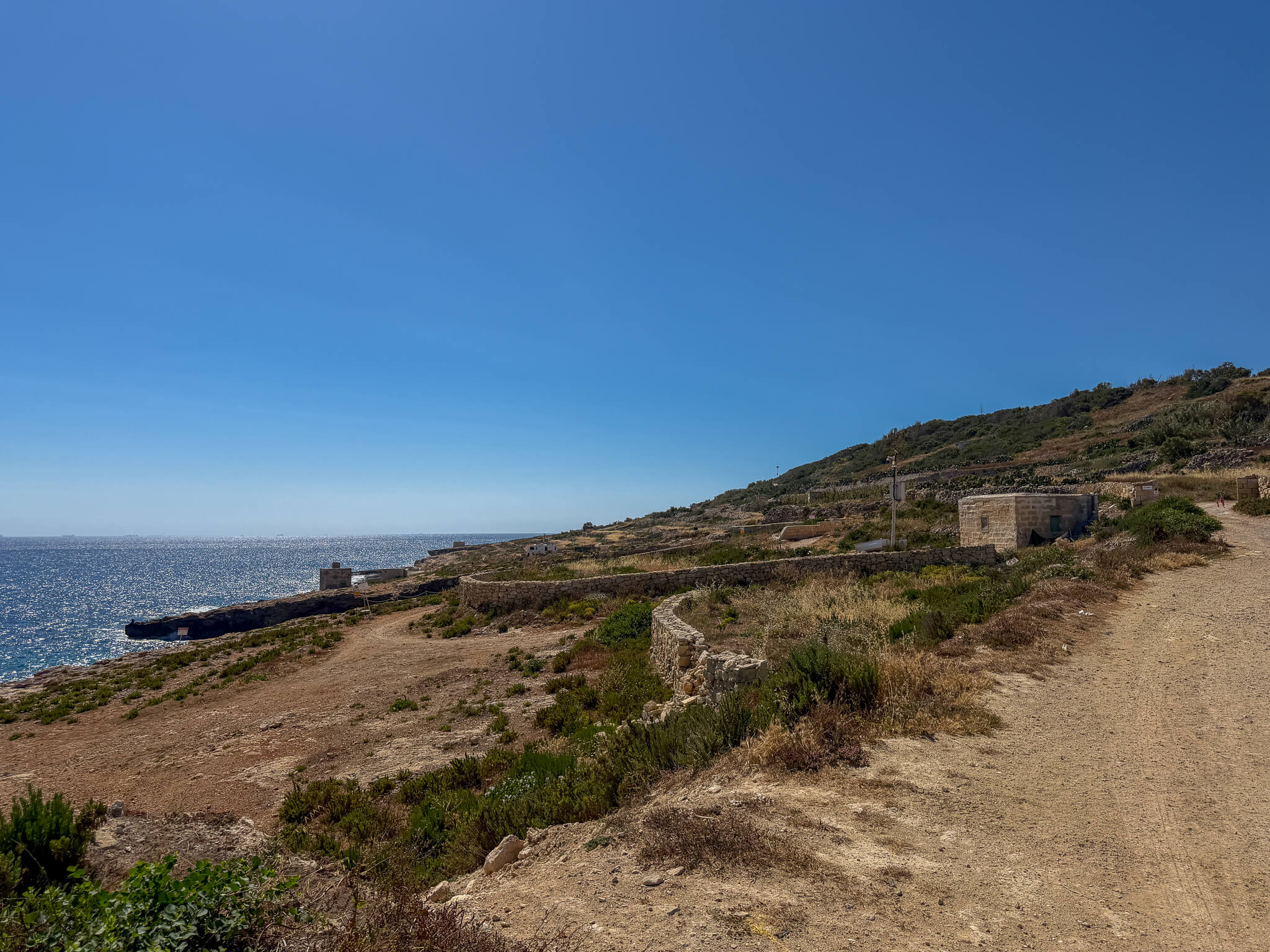
Despite the change in terrain, the trail remains easy to follow and rewards you with stunning coastal views at every turn. It is also one of the finest spots on the island to catch the sunrise over the Mediterranean—an unforgettable experience that adds something truly special to the walk.
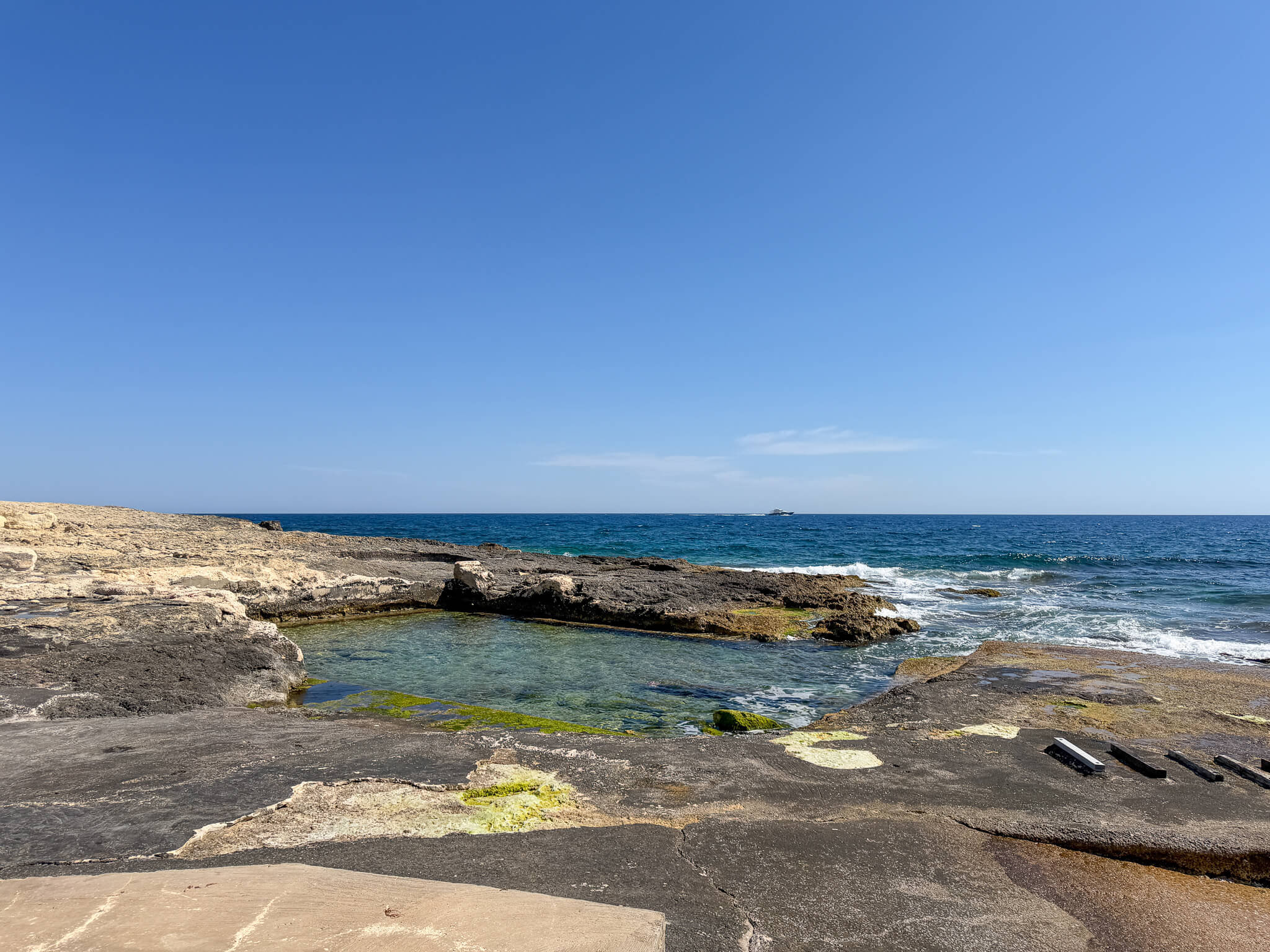
Along the way, keep an eye out for historic towers, hidden caves, salt pans, and old pillboxes that quietly tell stories of the island’s past. On clear days, bringing a pair of binoculars is well worth it; looking out across the open sea, you may spot dolphins or seabirds following their migratory routes between Europe and Africa.
Upon reaching Żonqor Point, take some time to rest along the white limestone shoreline and soak in the views. From here, you can either retrace your steps back to Xgħajra or extend your journey by looping inland, passing through open fields and lesser-known historical spots before returning.
Practical advice
This route includes long stretches of uneven paths and sections close to exposed coastal edges, requiring careful footing throughout. Much of the walk is unshaded and exposed to sun and wind, so walkers should carry sufficient drinking water and use appropriate sun protection. Some coastal sections can be slippery, particularly after rain or during rough sea conditions. Walkers should stay on established paths, avoid unstable cliff edges and respect restricted or private areas. This walk is suited for all levels of walkers, but should not be attempted in poor weather or strong winds.